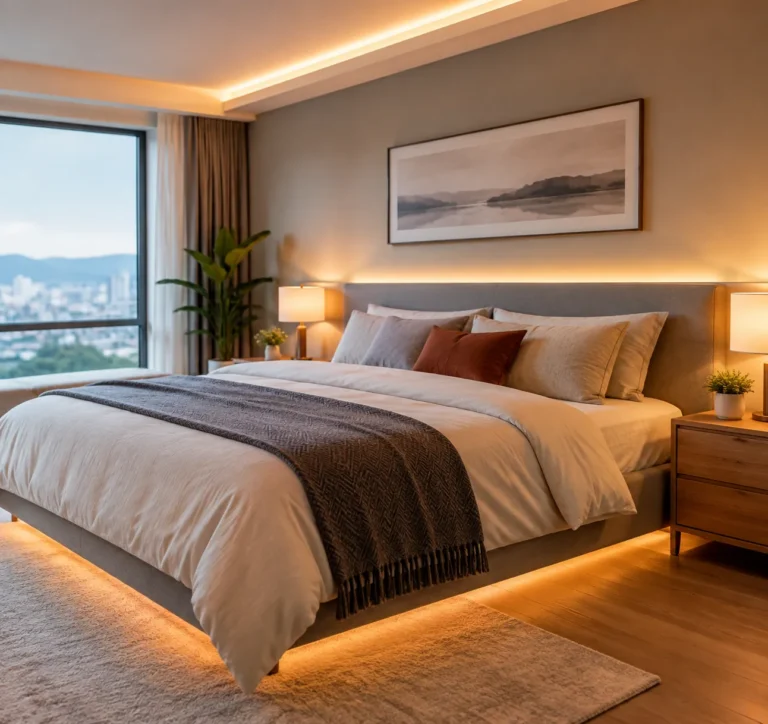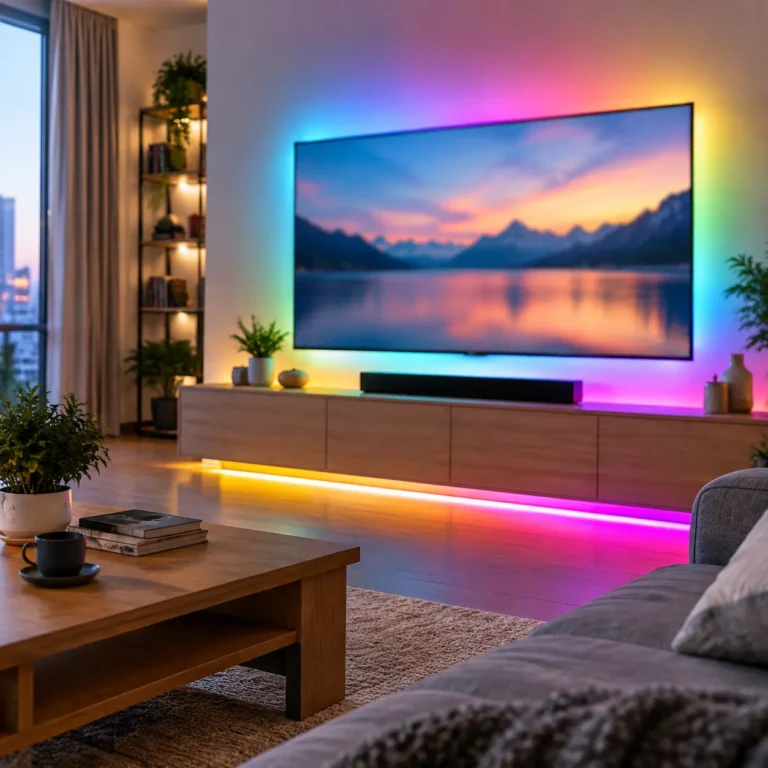
What Is a High Lumen LED Strip?
A high lumen LED strip is a flexible light source designed to produce a strong level of visible light from each metre of strip. It is used when standard LED tape does not provide enough brightness for applications such as cove lighting, architectural details, retail displays, and commercial interiors.
Understanding High Lumen
Lumens measure the total visible light produced by a product. A higher lumen rating generally means a brighter LED strip, but the result also depends on the strip length, colour temperature, diffuser, installation surface, and optical design.
When comparing products, check:
- Lumens per metre for linear brightness
- Lumens per foot for imperial project planning
- Lumens per watt for lighting efficiency
- The test conditions and product configuration behind the rating
LNLED high-efficiency LED strips can reach up to 210 lm/W, depending on the model and test conditions.
High Lumen Versus High Wattage
High wattage does not automatically mean high brightness. Wattage shows how much electrical power the strip uses, while lumens show how much visible light it produces.
A more useful efficiency comparison is:
Luminous efficacy = lumens ÷ watts
For example, a high-efficiency strip may produce more light with the same power, or the required brightness with less power than a conventional strip. This can help reduce energy use and simplify thermal management, subject to the selected configuration.
How High-Output LED Strips Differ from Standard LED Tape
A high-output LED strip typically uses a more efficient LED design, suitable LED density, and a PCB engineered to manage heat and voltage loss. LNLED offers high-efficiency SMD strips, high-density COB strips, and long-run constant-current options for different brightness and installation requirements.
Key differences may include:
- Higher light output per metre
- Improved lumens per watt
- Greater LED density or continuous COB illumination
- 2oz to 4oz double-sided pure copper PCB options
- Better suitability for commercial-grade and architectural lighting
- Model-dependent choices for high CRI, colour temperature, voltage, and waterproof protection
A standard LED tape may be suitable for decorative or low-level lighting. A high lumen LED strip is the more appropriate choice when the project requires measurable brightness, consistent colour, and reliable performance in a demanding installation.
The Main Specifications to Compare
A high lumen LED strip should be evaluated by more than brightness alone. Compare measured output, efficiency, heat-related requirements, colour quality, and consistency. Specifications can vary by model and test conditions, so use the complete technical datasheet when comparing products.
| Specification | What it means | Why it matters |
|---|---|---|
| Lumens per metre | Total visible light from one metre of strip | Helps match brightness to the space |
| Lumens per foot | Light output from one foot of strip | Useful for projects specified in imperial units |
| Lumens per watt | Light produced for each watt consumed | Shows luminous efficacy and energy efficiency |
| Wattage per metre | Electrical power used by one metre | Determines power supply size and heat load |
| LED density | Number of LEDs fitted per metre | Higher density can improve uniformity and reduce visible spotting |
| Colour temperature | Light appearance, measured in Kelvin | Selects warm, neutral, or cool white light |
| CRI | Accuracy of colour reproduction | Important for retail, hospitality, residential, and display lighting |
Lumens per Metre and Lumens per Foot
Lumens per metre is the most useful comparison for many commercial LED strip projects. For imperial specifications, convert the value to lumens per foot:
Lumens per foot ≈ lumens per metre ÷ 3.281
Always check whether the stated output is measured for the complete strip, a single metre, and under clearly defined test conditions.
Lumens per Watt and Wattage per Metre
A high-efficiency LED light strip produces more light with less electrical input. LNLED high-efficiency models can reach up to 210 lm/W, depending on the product configuration and testing conditions.
Use this basic relationship when comparing products:
Lumens per watt = lumens per metre ÷ watts per metre
Wattage per metre also affects power supply sizing, cable selection, voltage drop, and heat dissipation. A brighter strip is not automatically more efficient if it achieves output mainly by using more power.
LED Density and Technology
Higher LED density can create smoother illumination, especially in shallow aluminium profiles or applications where the strip is close to the diffuser. SMD strips offer a wide range of densities and output levels, while high-density COB LED strips provide continuous, dot-free light.
Colour Temperature and Consistency
Common colour temperatures include 1800K, 2200K, 2400K, 2700K, 3000K, 4000K, 5000K, 6000K, and 6500K. Warm white generally suits residential and hospitality spaces, while neutral or cool white is often selected for commercial and task lighting.
For projects using multiple reels, colour consistency is just as important as brightness. A consistent batch helps prevent visible differences between adjacent sections.
SDCM and MacAdam Ellipse
SDCM describes the visible colour variation between LED batches. A lower value indicates closer colour matching. LNLED specifies SDCM below 3, also described as a 3-step MacAdam ellipse, for controlled colour consistency across production batches.
CRI and Light Quality
CRI measures how naturally the strip shows object colours compared with a reference light source. Available options include Ra>80, Ra>90, Ra>95, and Ra>98, depending on the model.
- Ra>80: General commercial and residential lighting
- Ra>90: Retail, hospitality, and quality interior lighting
- Ra>95 or higher: Product displays, galleries, photography, and colour-critical areas
For a high-CRI high-lumen strip, confirm both the CRI rating and the required brightness, because these specifications depend on the selected LED and product design.
Which LED Strip Technology Produces the Best Results?
The best high lumen LED strip depends on the required brightness, visual appearance, run length, voltage, and installation environment. We use several technologies for different project needs rather than treating one design as suitable for every application.
High-Efficiency SMD LED Strips
High-efficiency SMD strips provide strong brightness with controlled power consumption. They are available in formats such as 2835, 5050, 3528, and 3838, with single-colour, tunable white, RGB, RGBW, and RGBCCT options. Selected high-efficiency models can reach up to 210 lm/W, depending on the configuration and test conditions.
SMD strips are a practical choice for:
- Cove and architectural lighting
- Commercial and retail displays
- Under-cabinet and ceiling lighting
- Projects requiring defined LED spacing and flexible configuration
High-Density COB LED Strips
COB LED strips mount many LED chips closely on the circuit board to create smooth, dot-free illumination. They work well with aluminium profiles and diffusers where visible LED points would affect the finish.
COB options include narrow 2.7 mm and 4 mm designs, RGBW, tunable white, high-density versions, and flexible round or curved formats. Our COB LED strip range is suited to clean linear lighting, display details, and installations where continuous light is the priority.
Long-Run Constant-Current LED Strips
A long-run constant-current LED strip is designed to maintain more consistent brightness along extended lengths. Selected products can reach up to 50 metres from a single power feed, subject to the product configuration and installation conditions.
This design can simplify large architectural, commercial, and cove-lighting projects by reducing voltage-drop concerns and the need for frequent power injection.
High-Voltage LED Strips
High-voltage LED strips accept 110V, 220V, or 230V AC input, depending on the model. They are useful for long linear runs where a low-voltage power supply would require additional equipment or more frequent connections.
High-voltage strips must be selected and installed with suitable protection and professional electrical practices. For low-voltage applications, 12V, 24V, 36V, and 48V systems offer more flexible options for controlled architectural and commercial lighting.
Choosing the Correct Voltage for a High Lumen LED Strip
The right voltage depends on the strip length, wattage, installation layout, and available power supply. For a high lumen LED strip, selecting the correct voltage helps control voltage drop and maintain consistent brightness.
12V LED Strips
A 12V LED strip suits shorter runs, compact installations, and low-voltage decorative lighting. It is common for under-cabinet lighting, small displays, and residential projects. Longer or higher-wattage runs may require more frequent power connections.
24V High-Output LED Strips
A 24V high-output LED strip is a practical choice for commercial, architectural, and cove lighting. Compared with 12V systems, it generally supports longer runs with less voltage drop and fewer power injection points. It is suitable for many high-efficiency SMD and COB configurations, depending on the product design.
48V LED Strips
A 48V LED strip is designed for extended runs and larger lighting layouts where reducing current is important. It can help simplify power distribution across long installations, subject to the strip’s specified length, wattage, and compatible power supply.
How to Reduce Voltage Drop
Voltage drop can cause the far end of an LED strip to appear dimmer or change colour. To improve performance:
- Select 24V or 48V for longer, higher-output installations where compatible.
- Keep cable runs short and use suitable cable sizes.
- Add power at the recommended points instead of powering a long run from one end.
- Use parallel power injection for extended layouts.
- Follow the manufacturer’s maximum run length and wiring instructions.
- Match the power supply output voltage to the LED strip rating.
LNLED supplies LED strip options in 5V, 12V, 24V, 36V, and 48V DC, with configurations selected according to brightness, run length, and project requirements.
Why Heat Dissipation Matters in High Lumen LED Strips
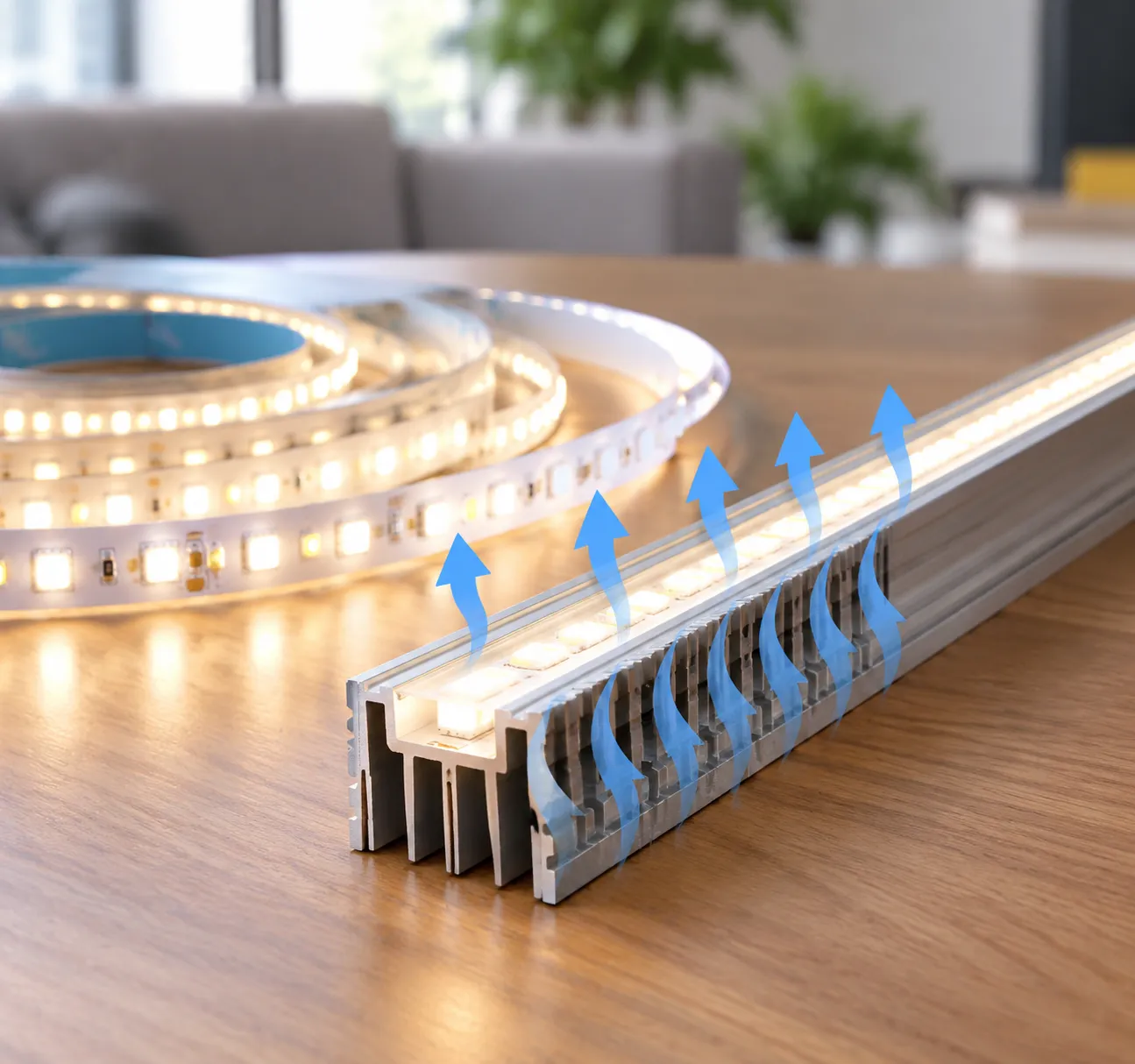
High lumen LED strips produce strong light, but part of their electrical energy becomes heat. If heat cannot escape, the strip may experience faster lumen decay, reduced service life, or inconsistent performance. Brightness should therefore be evaluated together with LED strip heat dissipation, not by wattage alone.
Brightness and Heat
A higher-output LED strip normally requires more power per metre. Proper thermal management helps maintain stable light output, especially in commercial-grade installations that operate for long periods. The actual heat level depends on the LED type, power, installation method, ambient temperature, and product configuration.
The Role of the PCB
The PCB transfers heat away from the LEDs and supports stable electrical performance. LNLED offers double-sided pure copper PCB options from 2 oz to 4 oz, designed to improve heat dissipation and reduce voltage drop. PCB width, copper thickness, LED density, and wattage should be considered together when selecting a high-efficiency LED light strip.
Use an Aluminum Profile and Diffuser
For high lumen strip lights, an aluminum channel provides a practical heat path and also supports a clean installation. A diffuser can soften bright points and protect the strip, while COB LED strips provide continuous, dot-free illumination in suitable applications. Keep the strip firmly attached to a clean, flat surface and select the profile according to the strip width and power level. LED strip lighting products are available in different output, PCB, LED density, and protection configurations for project-specific requirements.
Selecting the Right IP Rating for a High Lumen LED Strip
The correct IP rating depends on the installation environment and the level of protection required. A higher rating can improve water resistance, but it may also affect flexibility, heat dissipation, and light transmission.
IP20 for Dry Indoor Applications
IP20 LED strips have no waterproof coating and are suitable for dry indoor locations such as:
- Ceiling coves
- Under-cabinet lighting
- Shelves and display units
- Dry architectural profiles
Because the strip remains open, it offers good flexibility and allows heat to move away from the LEDs more easily. Install it inside an aluminium channel where possible, especially for a high lumen LED strip.
IP54 and IP65 for Limited Moisture Exposure
IP54 and IP65 LED strips use silicone glue or drop coating for added protection against dust and limited moisture. They can suit areas such as kitchens, covered commercial spaces, and locations exposed to occasional splashes.
These coatings provide more protection than IP20, but they are not automatically suitable for continuous water exposure or underwater installation. Verify the complete product construction and installation conditions before use.
IP67 and IP68 for Outdoor or Wet Environments
For outdoor, landscape, façade, or wet-area projects, IP67 waterproof LED strips use a silicone tube or similar protective sleeve. IP68 LED strips use fuller silicone protection and may be suitable for more demanding applications, including underwater use, when the product is specifically designed for it.
A waterproof high-lumen LED strip still requires sealed connections, suitable end caps, and correct installation to maintain its rated protection.
How Waterproof Coatings Affect Performance
Silicone coatings and sleeves can change the strip’s physical and optical performance:
- Flexibility: Thicker protection makes the strip less flexible and limits tight bends.
- Heat dissipation: Additional material can retain more heat, so aluminium channels and suitable thermal design remain important.
- Light transmission: The coating may slightly change the appearance or brightness of the light, depending on its thickness and clarity.
- Maintenance: Waterproof versions may be more difficult to repair or reconnect after installation.
Choose the lowest IP rating that safely meets the environment. This helps preserve flexibility, thermal performance, and light output while keeping the installation practical. LNLED offers LED strip options from IP20 to IP68, with custom waterproof constructions available through its LED strip product range.
How to Size the Power Supply for a High Lumen LED Strip
A high lumen LED strip needs a power supply that matches its voltage, total wattage, and installation length. An undersized unit can cause brightness loss, flicker, or premature failure.
Basic Power Supply Calculation
Use this simple formula:
Total power = Strip wattage per metre × Strip length
Then add a practical reserve:
Recommended power supply rating = Total power × 1.2
For example, a 24V strip rated at 20W per metre and used for 5 metres requires 100W. A power supply rated at approximately 120W provides a suitable operating margin. Confirm the actual wattage from the product’s technical data, as high-efficiency and high-density models vary by configuration.
Choosing the Correct Output Voltage
The power supply output must match the strip voltage exactly:
- 12V LED strip: Use a 12V DC power supply.
- 24V high-output LED strip: Use a 24V DC power supply.
- 48V LED strip: Use a 48V DC power supply.
Do not connect a strip to a higher voltage. This can damage the LEDs and PCB. For longer commercial runs, 24V or 48V systems can help reduce current and voltage drop compared with 12V, subject to the selected model and wiring plan.
Constant-Voltage and Constant-Current Systems
Most flexible LED strips use a constant-voltage power supply, with the voltage stated on the product specification. A constant-current driver is used only when the strip is designed for that operating method. These systems should not be substituted for one another without technical confirmation.
When selecting a driver, check:
- Output voltage and wattage
- Input voltage suitable for the local electrical supply
- Compatibility with the strip and control system
- Protection and enclosure requirements for the installation environment
Dimmers and Controllers
A dimmer or controller must support the strip’s voltage and total load. RGB, RGBW, RGBCCT, and digital addressable strips require compatible control equipment rather than a simple single-colour dimmer. For high-output installations, divide the load across suitable channels or power supplies when required.
Commercial Project Considerations
For commercial LED strip lighting, plan the power supply position, cable length, power injection points, ventilation, and access for maintenance before installation. Keep voltage drop in mind on long runs, and use the manufacturer’s wiring guidance for the selected product.
LNLED supplies high-efficiency SMD, COB, and long-run constant-current LED strips, with factory-direct support for technical specifications, samples, OEM/ODM configurations, and project quotations through its high lumen LED strip manufacturing platform.
Common Applications for High Lumen LED Strips
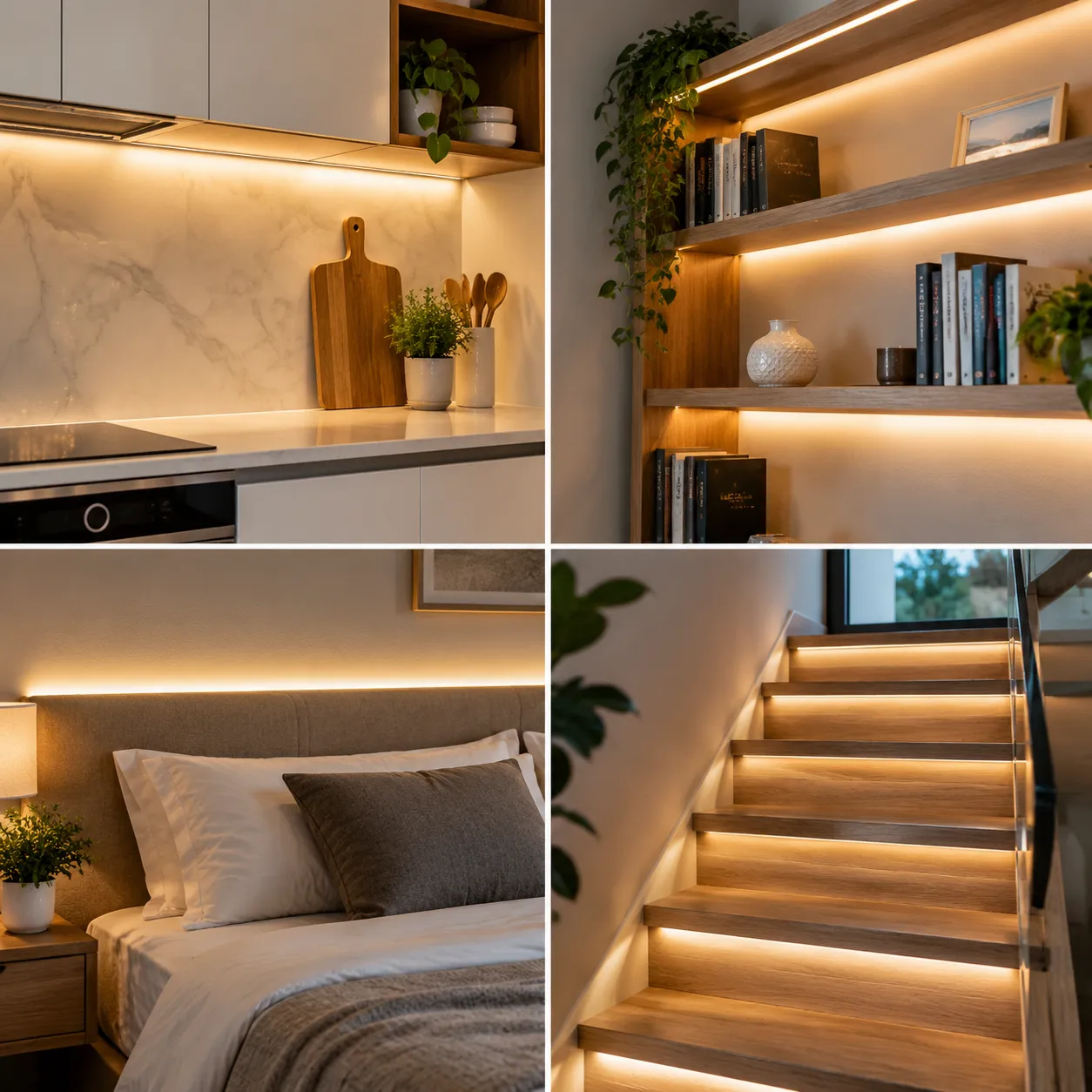
A high lumen LED strip delivers strong, even illumination for projects that need more than basic decorative light. The right model depends on the required brightness, colour quality, voltage, IP rating, and installation environment.
Architectural and Cove Lighting
Use high-output LED strips for coves, ceilings, wall washing, stair details, and linear profiles. High-efficiency SMD strips provide strong illumination, while COB LED strips create a smooth, dot-free appearance through diffusers and aluminium channels.
Retail and Display Lighting
Retail shelves, cabinets, showcases, and counters need clear light that presents products accurately. A high-CRI high-lumen strip with consistent colour helps reduce visible differences between sections and supports professional commercial LED strip lighting.
Residential Lighting
In homes, high lumen strip lights work well for kitchens, under-cabinet lighting, ceilings, wardrobes, and feature walls. Lower-output options may suit soft accent lighting, while brighter strips can provide useful task lighting when installed with suitable diffusion.
Hospitality and Entertainment Venues
Hotels, restaurants, bars, galleries, and event spaces often require reliable brightness with controlled colour temperature. RGB, RGBW, tunable white, and high-CRI configurations can support both functional lighting and changing decorative scenes.
Outdoor and Landscape Projects
For façades, gardens, pathways, signage, and exterior structures, select a waterproof high-lumen LED strip with an appropriate IP rating. IP67 and IP68 options are available for demanding wet locations, while the installation design should also protect connections and manage heat.
High Lumen LED Strip Installation Best Practices
A high lumen LED strip needs a clean, stable installation surface and reliable thermal support. Correct installation helps protect brightness, adhesion, and long-term performance.
Prepare the Installation Surface
Remove dust, oil, moisture, and loose paint before installation. The surface should be smooth and dry. Uneven or contaminated surfaces can weaken the adhesive and create poor contact with an aluminium profile.
Use Reliable Adhesive Backing
LNLED high-output LED strips can be supplied with genuine 3M 300LSE, 9080A, or VHB thermal-conductive tape, depending on the configuration. Press the strip evenly onto the surface and allow the adhesive to bond properly. Do not rely on adhesive alone for heavy, long, or high-temperature installations.
Avoid Sharp Bends and Excessive Pressure
Follow the strip’s bending direction and do not fold it over a sharp corner. Avoid pressing directly on the LEDs or electronic components. Excessive pressure may damage the PCB, solder joints, or LED package.
Plan Cutting and Connections
Cut only at the marked cutting points. Confirm the voltage, polarity, and connector type before making connections. For longer high lumen LED strip runs, plan power injection and connection points in advance to help reduce voltage drop.
Install in an Aluminium Channel
An aluminium channel improves heat dissipation and provides a cleaner installation. A compatible diffuser can also soften the light and protect the strip. For high-output applications, use the channel across the full length whenever possible, especially in commercial, architectural, and cove lighting projects.
How to Compare High Lumen LED Strip Suppliers
A bright LED strip is only useful when its performance, quality, and delivery can be verified. Before choosing a supplier, compare technical data, certifications, production capability, and customization support—not just the quoted price.
Request Complete Technical Data
Ask for a current technical datasheet covering:
- Lumens per meter and luminous efficacy in lm/W
- Wattage per meter and input voltage
- LED density and strip width
- CCT options and CRI levels
- SDCM or MacAdam ellipse data
- PCB copper thickness and heat-dissipation design
- IP rating and waterproof construction
- Maximum reel length, cutting points, and connection method
- Recommended power supply, profile, and installation conditions
Check whether test results apply to the exact model and configuration. Brightness can vary with voltage, CCT, CRI, LED density, and waterproof treatment.
Check Testing and Certifications
For commercial and international projects, confirm that the supplier can provide relevant documentation. LNLED products are listed with CE, RoHS, UL, ETL, and TUV certifications. Certification requirements may vary by market, application, and product configuration, so verify the documents for the specific strip.
Also review:
- Sample test results
- Color consistency records
- Quality-control procedures
- Warranty terms
- Product lifetime and lumen-maintenance information
Evaluate Manufacturing Capability
A reliable factory should demonstrate stable production and quality control. LNLED operates a 5,000 m² facility, with 60+ skilled workers, 8 SMT production lines, and a stated capacity of up to 1,500,000 meters per month. The company reports more than 10 years of LED strip manufacturing experience and exports to over 80 countries.
When comparing suppliers, assess:
| Evaluation point | What to verify |
|---|---|
| Production scale | Factory facilities, equipment, and monthly capacity |
| Quality control | Inspection process and batch consistency |
| Delivery | Standard lead time and sample availability |
| Export experience | Ability to support international orders |
| Technical support | Product selection, installation, and project guidance |
Choose Custom and Factory-Direct Solutions
A factory-direct LED strip supplier can support OEM and ODM requirements, including:
- Custom PCB width, copper thickness, and printed markings
- LED density, wattage, lumen output, and CCT
- SMD, COB, long-run constant-current, or high-voltage designs
- Reel lengths, labels, packaging, and branding
- IP20 to IP68 protection options
- Project-specific samples and technical specifications
LNLED offers free samples and standard order lead times of approximately 5–7 days, subject to product configuration and order details. For distributors, contractors, architects, and OEM buyers, comparing the complete technical and service package helps identify a dependable high lumen LED strip supplier rather than the lowest initial quote.
High Lumen LED Strip Buying Checklist
A clear specification checklist helps prevent poor brightness, color mismatch, overheating, and voltage-drop problems. Before ordering a high lumen LED strip, confirm the following points with the supplier.
| Buying point | What to confirm |
|---|---|
| Brightness | Specify the required lumens per meter or lumens per foot. Compare results under the same test conditions. |
| Luminous efficacy | Check the rated lumens per watt. LNLED high-efficiency models can reach up to 210 lm/W, depending on the product configuration. |
| Color and CRI | Select the required color temperature, such as 2700K, 3000K, 4000K, or 6500K. For accurate colors, consider CRI options above 90, 95, or 98. |
| Voltage and length | Choose a suitable system voltage, including 12V, 24V, or 48V. Confirm the strip length and connection plan before installation. |
| Voltage drop | Review the total wattage, maximum run length, and need for power injection. Longer installations may require a higher-voltage system or additional feed points. |
| IP rating | Use IP20 for dry indoor areas. Consider IP54 or IP65 for limited moisture exposure, and IP67 or IP68 for outdoor or wet locations. |
| Thermal construction | Check the PCB design, copper thickness, and installation method. A 2oz to 4oz double-sided pure copper PCB can support heat dissipation and reduce voltage loss. |
| Aluminum profile | Plan an aluminum channel and diffuser where the strip needs mechanical protection, improved heat management, or a smoother appearance. |
| Dimming and control | Confirm compatibility with the intended dimmer, controller, SPI, DMX512, or other control system. |
| Certifications | Request applicable documentation, including CE, RoHS, UL, ETL, or TUV certifications, based on the destination market. |
| Samples and warranty | Test samples for brightness, color consistency, heat, adhesive performance, and actual power consumption. Confirm the available 3- to 5-year manufacturer warranty. |
| Delivery and customization | Confirm lead time, reel length, packaging, labeling, MOQ, and OEM or ODM requirements before placing a wholesale order. |
For professional projects, request a complete technical datasheet rather than relying only on a product name. We can provide factory-direct samples and discuss custom PCB width, LED density, wattage, lumen output, reel length, waterproof construction, and packaging requirements for different markets.
Frequently Asked Questions About High Lumen LED Strips
What is the brightest LED strip light?
There is no single brightest model for every application. Brightness depends on LED type, power, LED density, color temperature, and test conditions. LNLED high-efficiency LED strips reach up to 210 lm/W, depending on the product configuration. High-density SMD, COB, and long-run constant-current models are suitable for demanding architectural and commercial lighting.
Are high lumen LED strips energy efficient?
Yes, a high-lumen LED strip can produce more light from the same electrical input than a standard strip. Compare lumens per watt, not wattage alone. Actual performance depends on the selected model, operating conditions, power supply, and installation.
Is a 24V LED strip better than a 12V strip?
Neither voltage is always better. A 12V LED strip suits shorter runs and compact installations. A 24V high-output LED strip normally offers lower voltage drop over longer runs and is often more practical for commercial, architectural, and cove lighting. The correct choice depends on strip length, power, wiring, and power-injection requirements.
Do high-lumen LED strips need an aluminum channel?
An aluminum channel is strongly recommended for high-output installations. It helps transfer heat away from the strip and can support a diffuser for a cleaner appearance. For higher wattage, long operating hours, or commercial projects, proper thermal management is especially important.
Can high-lumen LED strips be used outdoors?
Yes, when the strip has the correct protection level for the environment:
| IP rating | Typical use |
|---|---|
| IP20 | Dry indoor areas |
| IP54/IP65 | Limited moisture or splash exposure |
| IP67 | Outdoor and wet locations |
| IP68 | Full silicone protection and suitable configurations for underwater use |
Waterproof coatings can affect flexibility, heat dissipation, and light transmission. Installation details should match the selected model.
What CRI should I choose?
Choose the CRI according to the visual requirements:
- Ra>80: General lighting
- Ra>90: Retail, hospitality, residential, and display areas
- Ra>95 or Ra>98: Applications where accurate color appearance matters
High CRI performance should also be reviewed together with the LED strip’s color temperature and SDCM specification.
Can a manufacturer customize a high-lumen LED strip?
Yes. LNLED provides OEM and ODM options for high-lumen LED strips. Customization may include:
- PCB width and copper thickness
- LED density and power level
- Lumen output and color temperature
- CRI, waterproof rating, and reel length
- Packaging, labels, and silk-screen printing
LNLED supports factory-direct samples, technical specifications, wholesale supply, and custom LED strip solutions. Contact the manufacturer to request a suitable sample, technical datasheet, or quotation based on the project requirements.