Core Principles of Bedroom LED Lighting Design
A well-engineered bedroom LED lighting layout moves beyond a single ceiling fixture. We design bedroom illumination around three functional layers: ambient, task, and accent lighting. Balancing these layers creates a restful sanctuary that easily transitions into a space for reading, dressing, and relaxing.
Bedroom LED Lighting Layers at a Glance
| Lighting Layer | Primary Purpose | Ideal Placement | Recommended LED Type |
|---|---|---|---|
| Ambient | Overall indirect general glow | Ceiling coves, curtain pelmets | High-density COB / SMD strip in aluminum channels |
| Task | Focused functional lighting | Reading nooks, vanity mirrors, wardrobes | High CRI 90+ tunable white linear profiles |
| Accent | Visual depth and mood enhancement | Under-bed perimeter, headboard niches, wall panels | Ultra-warm low-output strips or flexible neon |
Ambient Lighting for Indirect General Glow
Ambient lighting provides the baseline illumination for the entire room without causing eye strain.
- Indirect Distribution: We bounce light off ceilings or walls using hidden architectural coves to prevent direct diode glare.
- Diffused Softness: Using dotless COB strips or frosted aluminum diffusers ensures an unbroken, soft illumination that sets a calm baseline.
- Full-Range Dimming: Smooth dimming from 100% down to 0.1% allows effortless transitions from daytime routines to wind-down hours.
Task Lighting for Reading Nooks and Dressing Areas
Task lighting delivers focused, shadow-free illumination where specific visual accuracy is required.
- Reading Zones: Directional linear fixtures with narrow beam spreads or bedside profile lights eliminate eye fatigue without over-illuminating the entire room.
- Vanity and Dressing Stations: High-fidelity lighting with CRI 90+ or CRI 95+ ensures accurate color rendering for clothing selection and makeup application.
- Glare Control: Angled mounting profiles position the light source away from direct sightlines to maintain visual comfort.
Accent and Mood Lighting for Architectural Features
Accent lighting brings architectural details to life and introduces subtle nighttime illumination.
- Headboard and Wall Grazing: Concealed LED strips behind headboards or along fluted wall panels highlight textures and add depth to the room.
- Floating Under-Bed Glow: Low-voltage strips mounted beneath bed frames create a weightless visual effect while doubling as a soft nightlight.
- Niches and Millwork: Recessed micro-channels inside shelving and joinery add visual interest and elevate high-end interior finishes.
Selecting the Best Bedroom LED Color Temperature and Light Quality
When designing a restful space, the spectral output and color rendering of your bedroom led setup matter just as much as brightness. We focus on matching the exact Kelvin rating and color metrics to how the body naturally transitions into rest.
Kelvin Breakdown: 2200K to 4000K
Choosing between warm white vs cool white in the bedroom comes down to function and time of day:
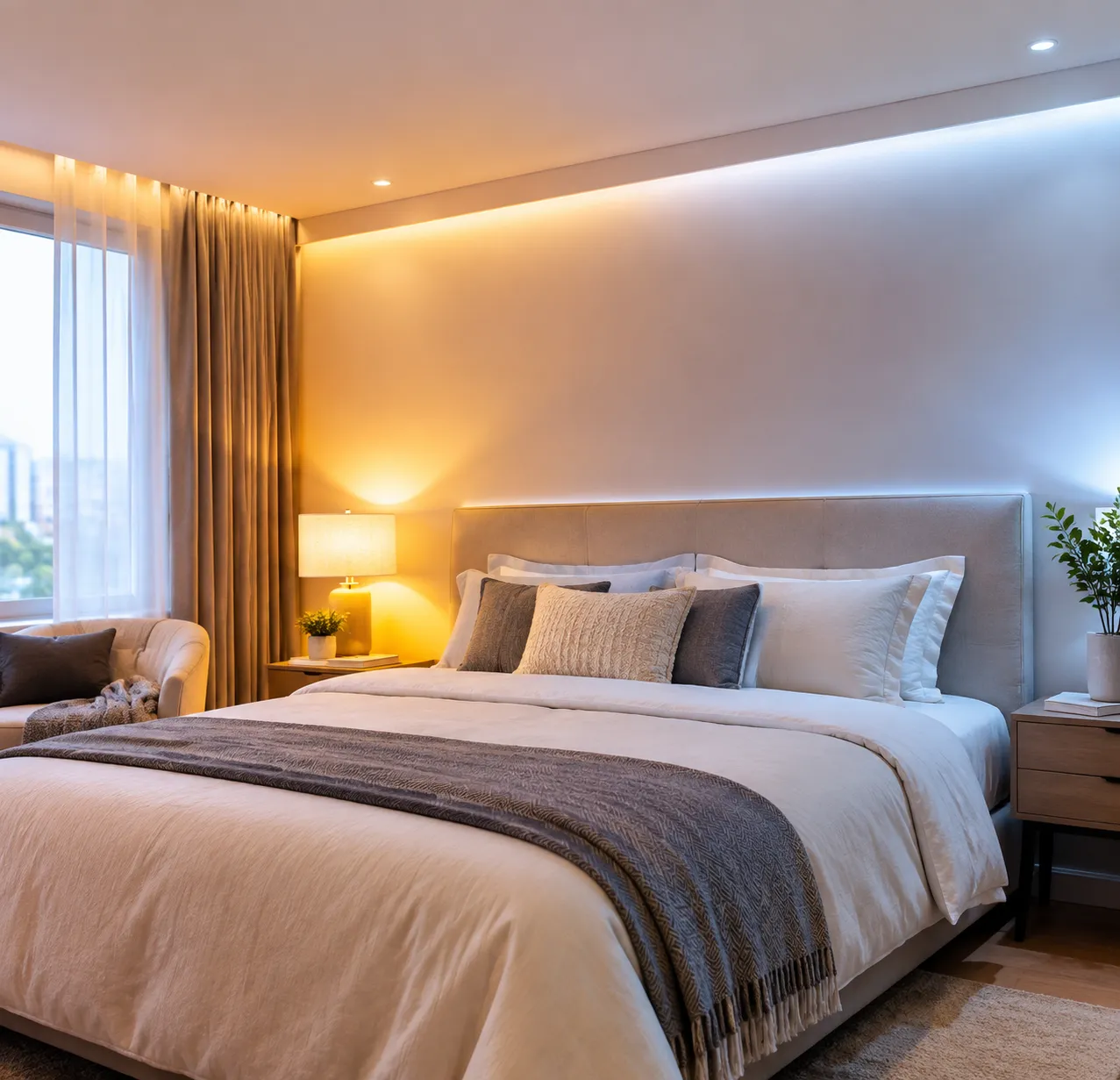
- 2200K – 2400K (Ultra-Warm White): Emits a soft, candle-like glow. It minimizes blue light exposure, making it the top choice for under-bed nightlights, headboard grazing, and pre-sleep winding down.
- 2700K – 3000K (Warm White): The standard residential baseline. It provides a comfortable, inviting ambiance for general ceiling coves and wall sconces without feeling overly yellow.
- 4000K (Neutral White): Clean and crisp without turning clinical. Best applied strictly to task-focused zones such as vanity mirrors, dressing tables, or dedicated reading nooks where visual clarity is required.
Tunable White (2700K–6500K) for Circadian Rhythm
Static color temperatures can limit how a multi-use master suite functions. We frequently implement tunable white CCT 2700K 6500K systems to mirror natural sunlight progression throughout the day:
- Morning (5000K–6500K): Crisp daylight suppresses melatonin production, helping you wake up alert.
- Midday (4000K): Balanced neutral tone for reading, cleaning, and daytime tasks.
- Evening (2200K–2700K): Warm, golden-hour light signals the brain to prepare for restorative sleep.
Pairing dynamic CCT controls with smart led strip lights for colorful home lighting enables automated daily scheduling that shifts color temperature smoothly in the background.
High CRI 90+ Ratings for Visual Comfort
Low-quality LEDs wash out skin tones and distort bedroom decor. We build our bedroom solutions with high CRI 90 LED lighting (R9 > 50) to ensure high-fidelity light output:
- Natural Skin Tones: Accurate rendering makes makeup application and wardrobe selection seamless.
- Rich Fabric and Material Tones: Wood grain, linen headboards, and painted surfaces appear deep and true to design intent.
- Reduced Eye Strain: High spectral continuous light produces a softer, more comfortable visual environment during evening reading sessions.
Choosing the Right Bedroom LED Hardware
Selecting the right fixtures directly impacts sleep comfort, glare control, and product lifespan. We design and specify linear bedroom LED hardware that delivers continuous illumination without harsh hotspots or visible diodes.
Dotless COB Strip Lights vs. Standard SMD Strips
Standard SMD (Surface Mount Device) strips place individual diodes at set intervals. In low-clearance bedroom applications—such as floating bed frames or shallow coves—individual SMD diodes create distracting “dotting” reflections on glossy floors or headboard surfaces.
We recommend high-density COB LED strips for seamless, dot-free lighting. By packing hundreds of micro-chips directly onto the PCB under a continuous phosphor layer, COB technology delivers:
- Spot-free output: Zero visible hotspots even without deep diffuser channels.
- Uniform light beam: A wide 180-degree optical spread that softens shadows across walls and ceilings.
- Compact profile: Fits into micro-grooves and slim millwork where standard channels cannot go.
| Feature | Standard SMD Strips | Dotless COB LED Strips |
|---|---|---|
| Hotspot Visibility | Visible dots in shallow profiles | Completely seamless, dot-free |
| Beam Angle | ~120° | ~180° |
| Minimum Mounting Depth | Requires 15mm+ channel to diffuse | 0mm (spotless even direct-view) |
| Best Bedroom Use | Deep ceiling coves | Headboard grazing, under-bed, open millwork |
Aluminum Channel Diffusers for Thermal and Glare Management
Direct-sticking tape lights onto bare wood or drywall shortens diode life and creates direct eye glare. An LED aluminum channel diffuser solves both engineering hurdles:
- Heat Dissipation: The extruded aluminum acts as a continuous heat sink, pulling thermal load away from the PCB to protect color consistency and extend diode life beyond 50,000 hours.
- Glare Diffusion: Frosted or opal polycarbonate (PC) covers soften lumen intensity at eye level, transforming sharp direct light into soothing indirect bedroom illumination.
- Mounting Versatility: Surface-mount, corner 45-degree, and plaster-in flush trim profiles allow clean integration into joinery, baseboards, and drywall reveals.
Flexible Silicone Neon LED Strips for Curved Accents
For rounded architectural features, fluted paneling, and custom headboard contours, rigid aluminum channels fall short. We engineer silicone neon LED strips with top-bending and side-bending flexibility to navigate tight radiuses effortlessly.
- 360° and Side-Bend Options: Follows modern organic headboard curves without light breaks.
- Built-in Silicone Encapsulation: Emits completely uniform, glare-free light across the entire surface.
- Durable & Soft-Touch: Safe for low-level reach areas around bed frames and nightstands where soft-touch, impact-resistant housing is necessary.
Strategic Placement Techniques for Bedroom LED Lighting
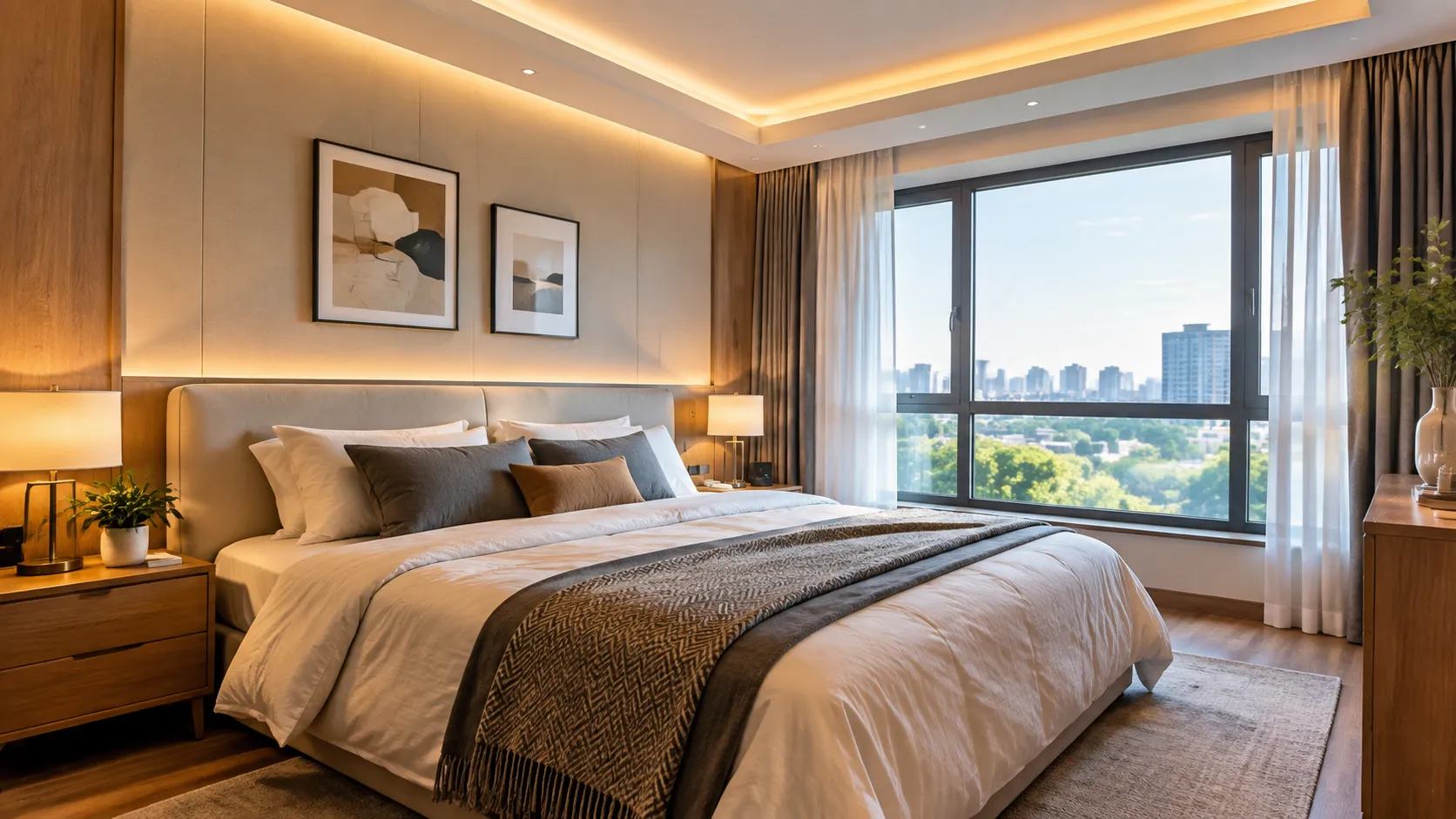
Where we position architectural linear lights matters just as much as the chips we specify. Proper placement eliminates glare, eliminates harsh direct view into the diodes, and creates balanced optical layers across the room.
Ceiling Cove Lighting Bedroom Layout and Throw Angles
For a seamless indirect glow along the ceiling perimeter, optical throw angle is everything. We place the extrusion inside a recessed cove lip, positioning the profile horizontally facing upward or angled slightly inward at 45 degrees toward the center of the ceiling.
- Lip Clearance: Maintain at least 100 mm to 150 mm between the light source and the ceiling ceiling plane to prevent hot streaks.
- Diffusion: Even with recessed placement, we pair standard strips with frosted diffusers or deploy dotless COB strips to create smooth, shadow-free throw across painted surfaces.
Headboard Accent Lighting and Wall Grazing
Backlighting custom headboards and architectural feature walls adds instant depth without visual clutter. When mounting strip lights behind an upholstered or wood-slatted headboard, we direct the beam against the wall to deliver textured wall grazing.
- Offset Distance: Mount the strip roughly 20 mm to 50 mm inward from the headboard edge to conceal the hardware while allowing the light beam to expand.
- Warmth Level: Ultra-warm 2400K to 2700K tones work best here to keep the focal point relaxing for late-night reading.
Under Bed LED Lighting for Floating Nightlights
Recessed perimeter illumination beneath the frame creates a floating bed effect and doubles as a glare-free guide at night.
- Placement: Inset the strips 100 mm to 150 mm from the outer edge of the frame facing downward toward the floor.
- Control: Pair these runs with dim-to-warm drivers or motion-triggered occupancy sensors tuned to lower output (5% to 10% brightness) to prevent eye strain during midnight trips.
Wardrobe Linear LED Profiles with Automated Sensors
Inside dressing areas and cabinetry, task clarity is essential. We route ultra-slim aluminum channels directly into joinery panels using specialized linear LED solutions to keep closet interiors fully illuminated without bulky fixtures.
- Integration: Route surface-mounted or recessed channels vertically along front cabinet stiles or horizontally under hanging rods.
- Sensors: Integrate low-voltage magnetic reed switches or miniature PIR sensors that toggle the light automatically when wardrobe doors swing open.
Low-Level Baseboard and Skirting Illumination
Flush skirting lighting delivers functional, low-glare navigation throughout master suites and hallways.
- Recessed Channels: Using plaster-in drywall channels or micro-skirting extrusions, light washes downward directly onto the floor plane.
- Low Wattage: We calibrate these runs to lower wattages (under 5W per meter) to provide clear pathfinding without interrupting sleep cycles.
Electrical Engineering and Power Distribution
Proper low-voltage power distribution makes or breaks a bedroom led setup. When we engineer lighting runs behind headboards or ceiling perimeters, we design the electrical foundation first to prevent voltage drop, audible coil whine, and visible light ripples.
24V Low Voltage LED Strip vs 12V Setups
Choosing operating voltage directly impacts performance over distance:
- 12V Systems: Require continuous power injection every 2.5 to 5 meters. 12V circuits pull twice the amperage of 24V circuits for identical wattage, causing heat buildup in wires and premature tail-end dimming.
- 24V Low Voltage LED Strip: Halves the current load, extending single-feed runs up to 10 meters with uniform brightness from start to end.
For nearly all bedroom led strip lights—especially hidden ceiling coves and closet perimeters—24V DC remains our default standard for safety and reliability. You can review detailed technical layouts in our led strip knowledge base.
Sizing Power Supplies with the 20% Safety Rule
Never load a power transformer to 100% capacity. Continuous loads at full rated capacity shorten driver lifespan and generate excess heat inside enclosed bedroom millwork.
Use this straightforward formula:
- Multiply total strip length (meters) by the strip’s rated wattage per meter (W/m).
- Add a 20% headroom factor (multiply total strip wattage by 1.2).
- Round up to the nearest standard output driver capacity (e.g., 60W, 100W, 150W, or 240W).
| Run Length (m) | Strip Load (W/m) | Base Wattage | With 20% Margin | Selected Driver |
|---|---|---|---|---|
| 3 m (Headboard) | 9.6 W/m | 28.8 W | 34.6 W | 40 W |
| 8 m (Cove) | 14.4 W/m | 115.2 W | 138.2 W | 150 W |
| 15 m (Room Perimeter) | 9.6 W/m | 144.0 W | 172.8 W | 200 W |
Selecting a Flicker-Free Dimmable Bedroom LED Driver
Low-quality power units use coarse Pulse Width Modulation (PWM) running at low frequencies, creating invisible strobing that causes eye strain, headaches, and disrupted melatonin production.
- Flicker-Free LED Power Supply: Ensure the driver provides smooth dimming down to 0.1% using high-frequency PWM (>3000 Hz) or continuous amplitude linear dimming.
- Acoustic Noise Control: Specify sealed, fanless units. Quality solid-state engineering prevents audible hums or buzzing when lamps are dimmed low for nighttime navigation.
- Protection Circuits: Premium drivers feature built-in auto-recovery against short circuits, over-voltage, and thermal overloads.
Smart Bedroom Lighting Control and Dimming Systems
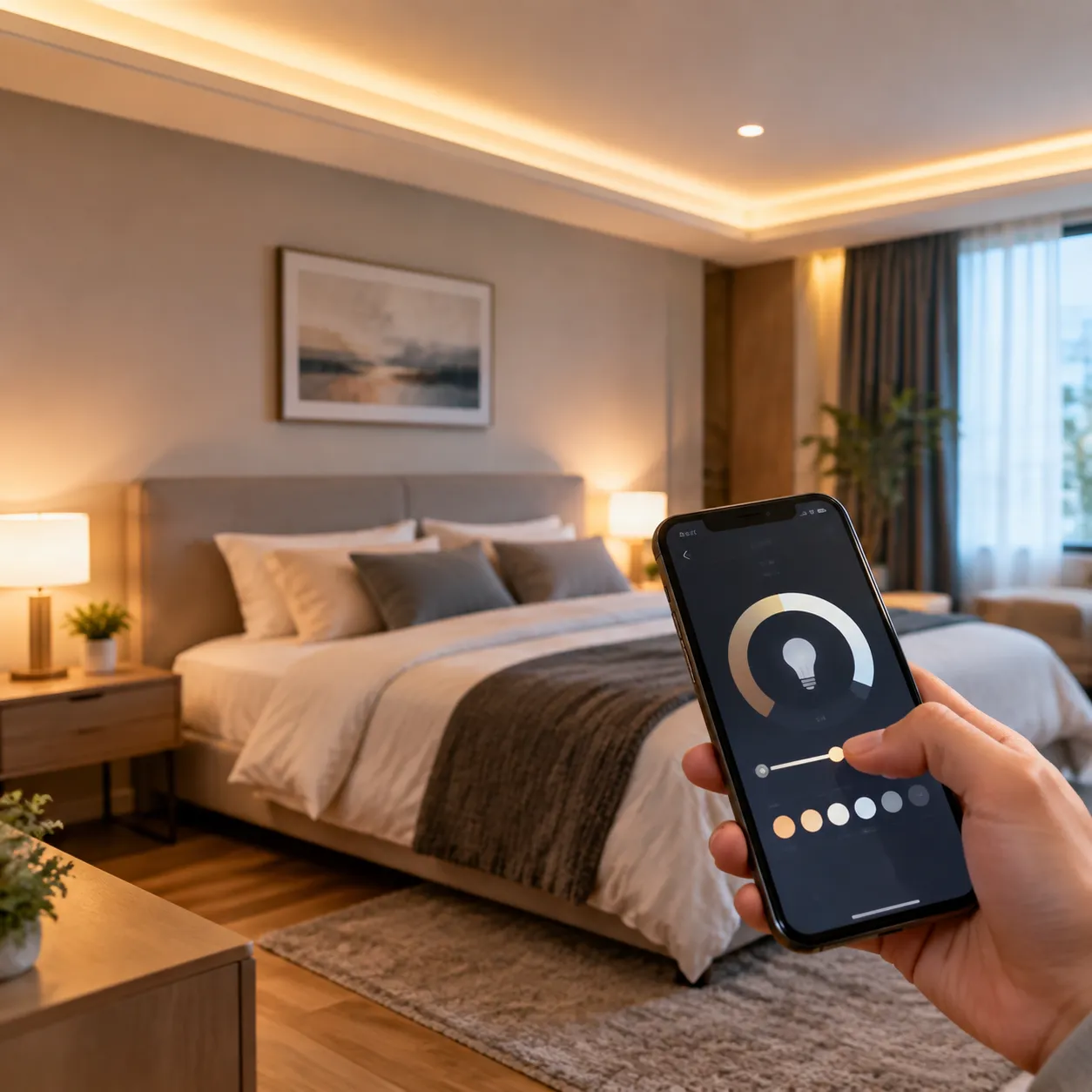
A bedroom LED setup is only as good as the control gear driving it. When designing a restful space, you need complete authority over brightness and color shift without audible hums or visible stepped jumps. We design our systems around smooth, responsive dimming protocols and versatile wireless interfaces that integrate cleanly into daily routines.
Dimming Protocols: TRIAC, 0-10V, DALI-2, and PWM
Choosing the right protocol determines how low and how smoothly your strips dim before cutting out:
- Phase-Cut (TRIAC / ELV): Best for standard retrofit projects where existing AC wall dimmers remain in place. It works reliably down to roughly 5%–10% brightness.
- 0-10V / 1-10V: A solid analog choice for commercial and residential applications requiring smooth, steady low-end dimming down to 1%.
- DALI-2: The gold standard for architectural setups. It provides individual fixture addressing, bidirectional feedback, and ultra-precise logarithmic dimming curves down to 0.1%.
- High-Frequency PWM (Pulse Width Modulation): Used on the secondary DC side of our smart controllers to prevent micro-flicker, ensuring sleep-friendly operation and zero camera interference.
Pairing high-spec tape with the right hardware from our architectural lighting products ensures true deep dimming without annoying buzzing at 1:00 AM.
Smart Control via Zigbee, Tuya, and RF Panels
Modern smart LED bedroom lighting control bridges mechanical wall operation with app and automation ecosystems.
| Control Method | Ideal Placement | Key Advantage |
|---|---|---|
| Wireless RF Wall Panels | Bedside tables & entry points | Battery-operated or AC-powered; requires no new switch leg wiring. |
| Zigbee 3.0 Controllers | Hidden in joinery / ceiling drops | Low-latency local control compatible with major home hubs. |
| Tuya / Wi-Fi Drivers | Direct driver location | Out-of-the-box smartphone control and voice assistant pairing. |
We frequently spec dual-setup systems: a discrete RF touch panel on the bedside headboard for physical control, backed by Zigbee automation to keep the room responsive even if internet service drops.
Custom Scene Presets for Bedroom LED Layouts
Static lighting fails modern bedrooms. We configure automated scenes to handle transitions through the day:
- Morning Wake-Up: The system slowly increases from 0.1% to 60% over 20 minutes, gently elevating brightness to naturally reset circadian rhythms.
- Evening Unwind: Ceiling coves shift to an ultra-warm 2200K–2400K glow dimmed to 20%, suppressing blue light exposure before sleep.
- Midnight Navigation: Under-bed and baseboard channels fire at 1% output via floor-level motion sensors, casting just enough floor illumination to guide your steps without disturbing a sleeping partner.
Installation Best Practices and Pitfalls to Avoid
Getting the best performance out of your bedroom led setup comes down to proper physical installation and heat control. Skipping basic prep work leads to peeling tapes, thermal degradation, and flickering lines of light.
Surface Preparation and Thermal Management in Joinery
Directly sticking LED strips onto bare timber, drywall, or laminate inside headboards and wardrobes causes rapid heat buildup that degrades diode phosphor and reduces lifespan.
- Surface Degreasing: Always wipe down mounting areas with isopropyl alcohol before applying the 3M thermal adhesive backing.
- Aluminum Extrusions: Always mount flexible strips inside an LED aluminum channel diffuser. The aluminum serves as a vital heatsink, keeping operating temperatures low and extending the life of your linear lighting.
- Air Circulation: Avoid sealing strip runs in airtight wooden millwork cavities without heat dissipation paths.
Soldered Connections vs. Mechanical Clip Connectors
While snap-on clip connectors look convenient, they introduce weak physical pressure points that can loosen over time and cause intermittent flickering in your bedroom.
- Soldered Leads: Direct wire-to-pad soldering guarantees a solid, low-resistance electrical connection that will never loosen behind a headboard or inside a ceiling cove.
- Heat Shrink Protection: Seal all soldered joints with dual-wall adhesive heat shrink tubing to prevent short circuits against aluminum channel walls.
- Clip Connectors: If using quick-connectors, choose piercing-style terminals rated for your strip’s exact PCB width and current load, and secure them firmly in place.
Driver Concealment and Service Access Planning
A silent, hidden power supply is essential for a peaceful bedroom environment. Planning where your drivers sit makes future maintenance straightforward without damaging custom furniture.
- Ventilated Concealment: Place drivers inside the top of wardrobes, behind removable kickboards, or inside accessible junction boxes in drop ceilings.
- Thermal Buffer: Keep at least 2 to 3 inches of clearance around the driver body to ensure passive airflow and eliminate heat trapping.
- Wiring Run Lengths: Keep low-voltage DC cable runs from the driver to the strip as short as practical to eliminate voltage drop and ensure balanced brightness.
When engineering custom millwork or architectural ceiling details, sourcing high-grade linear LED lighting solutions ensures consistent binning, proper thermal tolerances, and long-term reliability.
Custom Bedroom LED Solutions for Large Projects
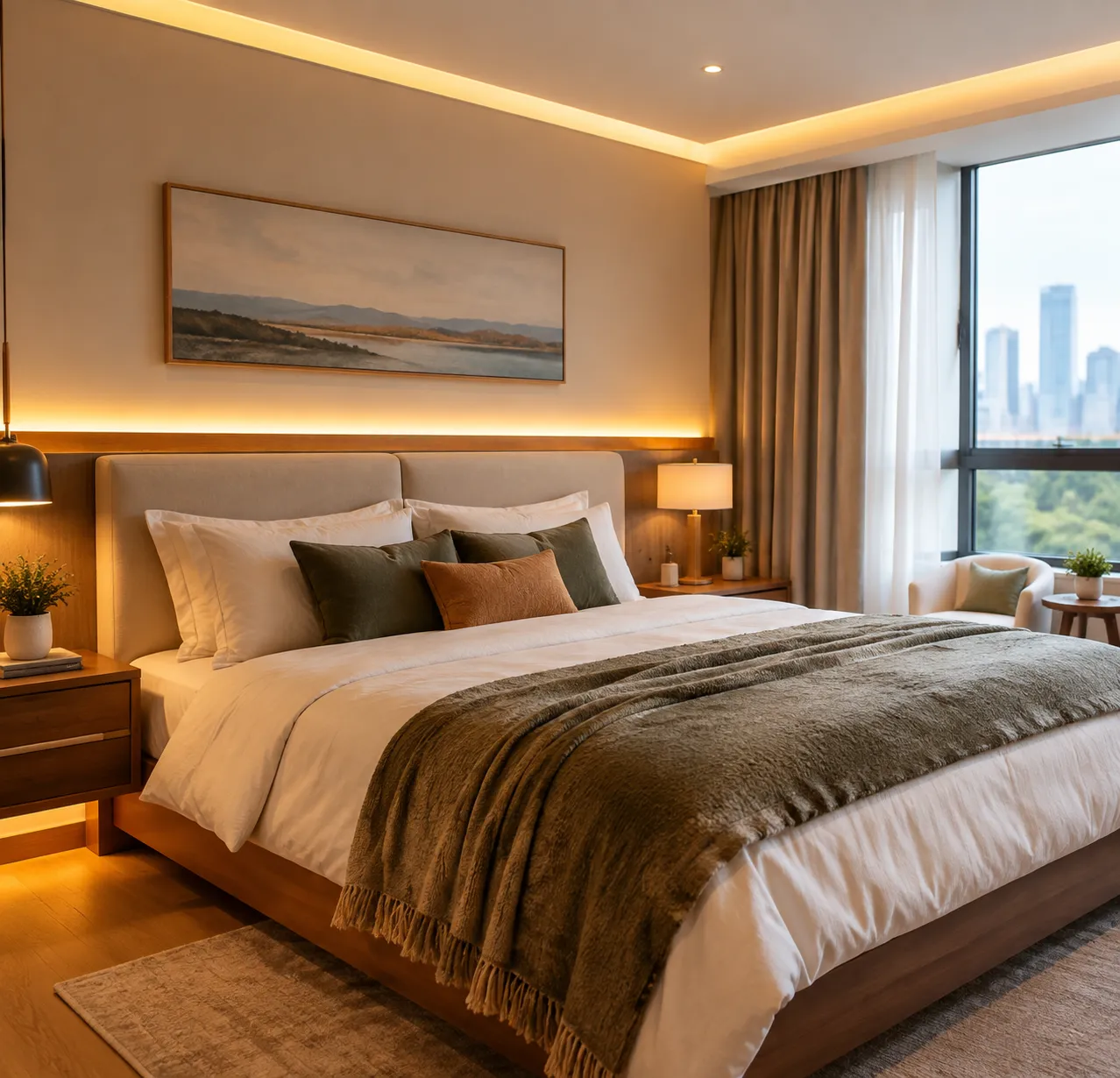
Scaling linear lighting across multi-room developments, boutique hotels, or luxury residential projects requires exact engineering. When outfitting dozens of rooms, off-the-shelf reels create site waste, slow down installation, and risk visible color shifts between fixtures. We manufacture tailored bedroom led strip systems and linear extrusions engineered directly to architectural schedules, eliminating guesswork on the job site.
Precision Strip Lengths and Strict Color Binning
Maintaining uniform ambient light across interconnected bedroom suites demands strict manufacturing controls. We produce custom-configured linear solutions that match your exact joinery and cove dimensions before delivery.
- Factory-Precut Lengths & Leads: Strips are cut, sealed, and soldered with project-specific feed wire lengths to eliminate job-site prep and prevent field-soldering failures.
- Tight MacAdam Ellipse Binning: We enforce 3-step (or tighter) SDCM binning across every production run. Every headboard, wardrobe, and drop-ceiling fixture delivers identical color temperature (CCT) and brightness from room to room.
- Micro Cut Increments: High-density PCB designs allow cut points as tight as 10mm–50mm, ensuring edge-to-edge dotless illumination without dark dead zones at cabinet ends.
- Custom PCB Engineering: We customize board width (down to 4mm for ultra-slim joinery), copper thickness (2oz–3oz for reduced voltage drop), and targeted wattages for code compliance.
| Customization Parameter | Standard Offering | Project-Specific Custom Capability |
|---|---|---|
| Input Voltage | DC 12V / 24V | Constant Current 24V / 48V long runs |
| Color Consistency | 3-Step MacAdam (SDCM ≤3) | 2-Step MacAdam (SDCM ≤2) single-bin |
| Color Rendering | CRI Ra > 90 | CRI Ra > 95+ / High R9 (>80) |
| Strip Cut Points | Standard 50mm – 100mm | Micro-pitch down to 8.3mm – 25mm |
| Protection Rating | IP20 Indoor | IP65 / IP67 Silicon Encapsulation |
Tailoring Aluminum Profiles to Architectural Specifications
Bedroom millwork and ceiling architectural details often require unique mounting solutions that standard profiles cannot accommodate. We extrude, cut, and finish linear aluminum channels to blend directly into surrounding finishes.
- Architectural Drywall & Plaster-In Channels: Flangeless trims integrate directly into gypsum ceiling coves and headboard walls, delivering a clean, trimless glow.
- Custom Anodized & Powder-Coated Finishes: Extrusions matched to RAL palettes, matte black, brushed brass, or custom millwork paint codes.
- Specialized Optic Diffusers: Opal, frosted, micro-prismatic, and narrow-beam silicone lenses provide zero-hotspot diffusion with minimal lumen loss.
- Pre-Assembled Linear Fixtures: Complete ready-to-mount kits with mounting clips, end caps, and pre-fitted diffusers to accelerate installation schedules on commercial build-outs.
Frequently Asked Questions About Bedroom LED Lighting
What is the best LED color temperature for sleeping?
For pure relaxation and restful sleep, ultra-warm white (2200K to 2700K) is the ideal choice. Warmer spectrums minimize disruptive blue light exposure, helping your body wind down naturally before bed. If your bedroom also doubles as a workspace or dressing area, we recommend CCT tunable white strips (2700K–6500K) so you can easily shift from crisp daylight for productivity to a soft, amber glow at bedtime.
How do you prevent visible LED dots and glare in a bedroom?
To eliminate harsh hotspots and ensure comfortable, eye-friendly light:
Switch to COB LED strips: Chip-on-board (COB) technology packs hundreds of diodes under a continuous phosphor layer to deliver true, seamless dotless illumination.
Use aluminum channel diffusers: Mount SMD strips inside aluminum channels fitted with frosted or milky polycarbonate diffusers.
Aim for indirect illumination: Direct light beams into ceiling coves, behind headboards, or underneath floating bed frames rather than toward direct lines of sight.
Is 12V or 24V better for bedroom LED strip runs?
24V low-voltage LED strips are the superior choice for almost every bedroom layout. While 12V works fine for short cuts under two meters, 24V systems carry current more efficiently over longer distances. This prevents noticeable voltage drop—meaning your lights stay consistently bright from the start of the strip to the very end of a perimeter ceiling cove.
How do you hide LED drivers and wiring in bedroom furniture?
Concealing power supplies and low-voltage wiring keeps joinery clean and safe:
Wardrobe & Closets: Mount slimline drivers above top fascias, behind false drawer panels, or on upper shelves with cut-out wire grommets.
Bed Frames & Headboards: Secure drivers directly to the underside of the bed base or inside integrated headboard cavities, ensuring adequate passive airflow around the driver casing.
Service Access: Always place power units in locations accessible for routine maintenance without having to tear down fixed millwork.