Middlemen vs. Direct-from-Factory Sourcing
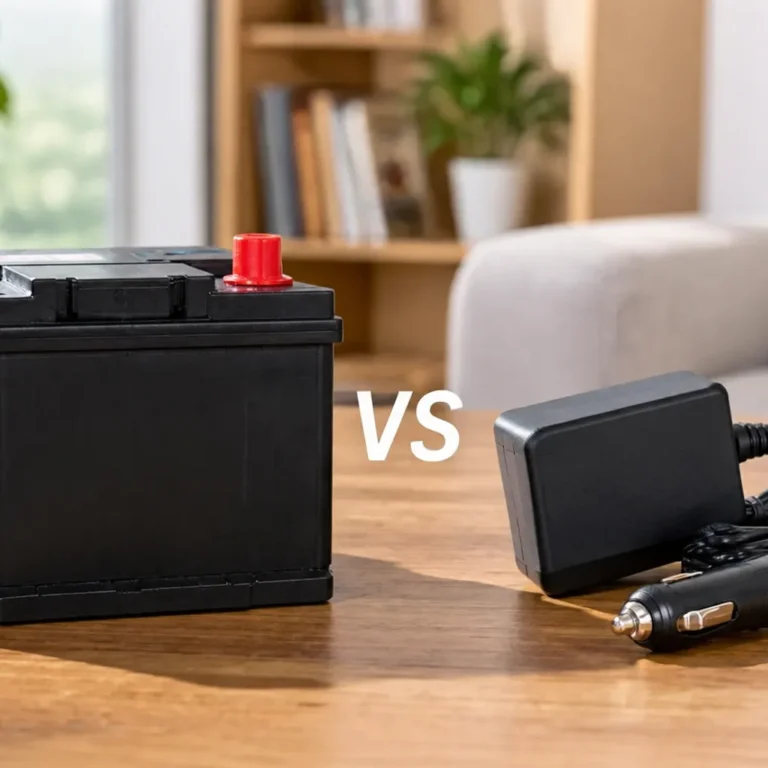
When sourcing inventory, cutting out trading companies and working directly with a led strip factory is the ultimate power move for your bottom line. Buying from the source eliminates unnecessary markups, guarantees part traceability, and opens a direct line to the engineers building your products.
Cost Efficiency at Scale
Every hand an LED strip passes through adds a markup. By partnering with a direct B2B LED strip supplier, you eliminate the middleman’s 15% to 30% margin. We pass these savings directly to you, allowing for aggressive pricing in your local market while maintaining healthy profit margins.
| Sourcing Channel | Average Markup | Customization Flexibility | Quality Accountability |
|---|---|---|---|
| Direct LED Strip Factory | 0% (Factory Direct) | High (Full OEM/ODM) | Direct & Immediate |
| Trading Company / Agent | 15% – 30% | Limited / Slow | Fragmented |
| Local Wholesaler | 40% – 60% | None (Off-the-shelf) | Delayed |
Strict Control Over Component Traceability
Quality issues ruin brands. When you work directly with our LED strip manufacturer facility, you get full transparency into the component supply chain. We control the exact source of every raw material, ensuring consistency across every single batch.
- Premium Binning: We lock in specific color bins to guarantee identical color temperatures across multiple production runs.
- Verified Substrates: We use high-grade, heavy-duty flexible printed circuit board (FPC) material for superior heat dissipation and durability.
- Certified Components: Every component is traceable, ensuring your final product easily qualifies for UL listed LED light strips certification.
Direct Technical Communication
Miscommunications delay projects and cost money. When you bypass middlemen, your engineering team speaks directly with our production engineers. This streamlined communication cuts development time in half and ensures your exact project specifications are met perfectly on the first run.
Whether you need complex OEM/ODM LED strip customization or simple adjustments to 12V and 24V voltage configurations, direct technical alignment eliminates errors and accelerates your time to market.
The SMT Line & Beyond: How Premium LED Strip Lights Are Manufactured
Ever wonder how a raw spool of copper and pile of tiny diodes transform into high-performance linear lighting? As a direct LED strip manufacturer, we manage this process under strict, automated conditions. Every single roll that leaves our LED strip factory floor undergoes a precise, multi-stage assembly process to guarantee seamless performance.
Stage 1: FPC Preparation & Solder Paste Printing
The foundation of any high-quality linear light is the flexible printed circuit board (FPC).
- The Process: We feed high-grade rolled copper FPCs into automated printers.
- Precision Application: A laser-cut stencil applies lead-free solder paste with micrometer accuracy onto the contact pads. This step ensures that the electrical connections for both the LEDs and resistors are perfectly uniform.
Stage 2: High-Speed SMT (Surface Mount Technology) Assembly
Once the solder paste is applied, the FPC moves directly into our high-speed SMT production line.
- Component Placement: Advanced pneumatic pick-and-place machines position surface-mount components—including LEDs and resistors—at speeds exceeding tens of thousands of components per hour.
- Component Accuracy: Optical sensors verify the alignment of each diode on the fly, ensuring perfect spacing. This accuracy is critical for maintaining uniform light output, especially on specialized runs like COB LED strip production.
Stage 3: Reflow Soldering & Circuit Inspection
With the components temporarily held in place by the solder paste, the strips enter the multi-zone reflow oven.
- Controlled Temperature Profiles: The oven uses a highly specific thermal profile to gradually melt the solder paste, creating unbreakable physical and electrical bonds without damaging the sensitive semiconductor chips.
- AOI Testing: Right after cooling, an Automated Optical Inspection (AOI) system scans the solder joints. It instantly flags any minor defects, like shifted chips or bridging, so they can be corrected immediately.
Stage 4: Automated Assembly & Waterproof Extrusion
For the final phase, individual FPC segments are seamlessly joined together to reach standard commercial lengths.
- Splicing & Quality Runs: Automated machines splice the shorter segments together into the final roll lengths.
- Silicon Extrusion: For projects requiring outdoor durability, we route the assembled strips through a state-of-the-art silicone co-extrusion line. This process encapsulates the electronics inside an IP67 waterproof jacket, protecting the components from dust, moisture, and UV damage without sacrificing color consistency or light output.
The Laboratory Standards: Rigorous Testing Methods Every Factory Must Have
As a professional led strip factory, we know that high performance cannot be left to chance. Premium LED strip lights require extreme precision, which is why our testing laboratory runs 24/7. We put every batch through a gauntlet of advanced scientific tests to ensure absolute consistency, safety, and longevity before shipment.
The Integrating Sphere
We use the Integrating Sphere to analyze the optical properties of our LED strips. This critical step in our LED strip quality control process measures:
Total Luminous Flux: The exact lumen output per meter.
Color Rendering Index (CRI): Ensuring we hit high CRI 90+ targets for vivid, true-to-life color.
CCT & Color Binning: Keeping color temperatures perfectly uniform across different production runs to avoid mismatched lighting installations.
Goniophotometer & IES Laboratory Testing
For architectural and commercial projects, raw data isn’t enough. Our Goniophotometer measures the spatial distribution of luminous intensity.
Generates industry-standard IES files for lighting designers.
Maps out precise beam angles to ensure the light spreads exactly as planned.
Guarantees that our wholesale LED linear lighting performs predictably in real-world layouts.
Thermal Shock & Environmental Chambers
LED strips must withstand harsh conditions, from freezing winters to scorching summers. Our environmental testing chambers simulate decades of weathering in just days:
Rapid Temp Cycling: Alternating extreme temperatures from -40°C to 80°C.
Humidity Resistance: Making sure our IP67 and IP68 waterproof coatings do not degrade, yellow, or crack over time.
Withstand Voltage & Continuity Testers
Safety is non-negotiable. Before packaging, every reel undergoes strict electrical safety checks:
Withstand Voltage Test: Ensures the insulation can handle unexpected electrical surges without short-circuiting.
Continuity Testing: Confirms that the copper traces on the flexible printed circuit board (FPC) are completely unbroken, guaranteeing consistent brightness from the first inch to the last.
OEM & ODM Customization: Tailoring LED Strips to Exact Project Specs
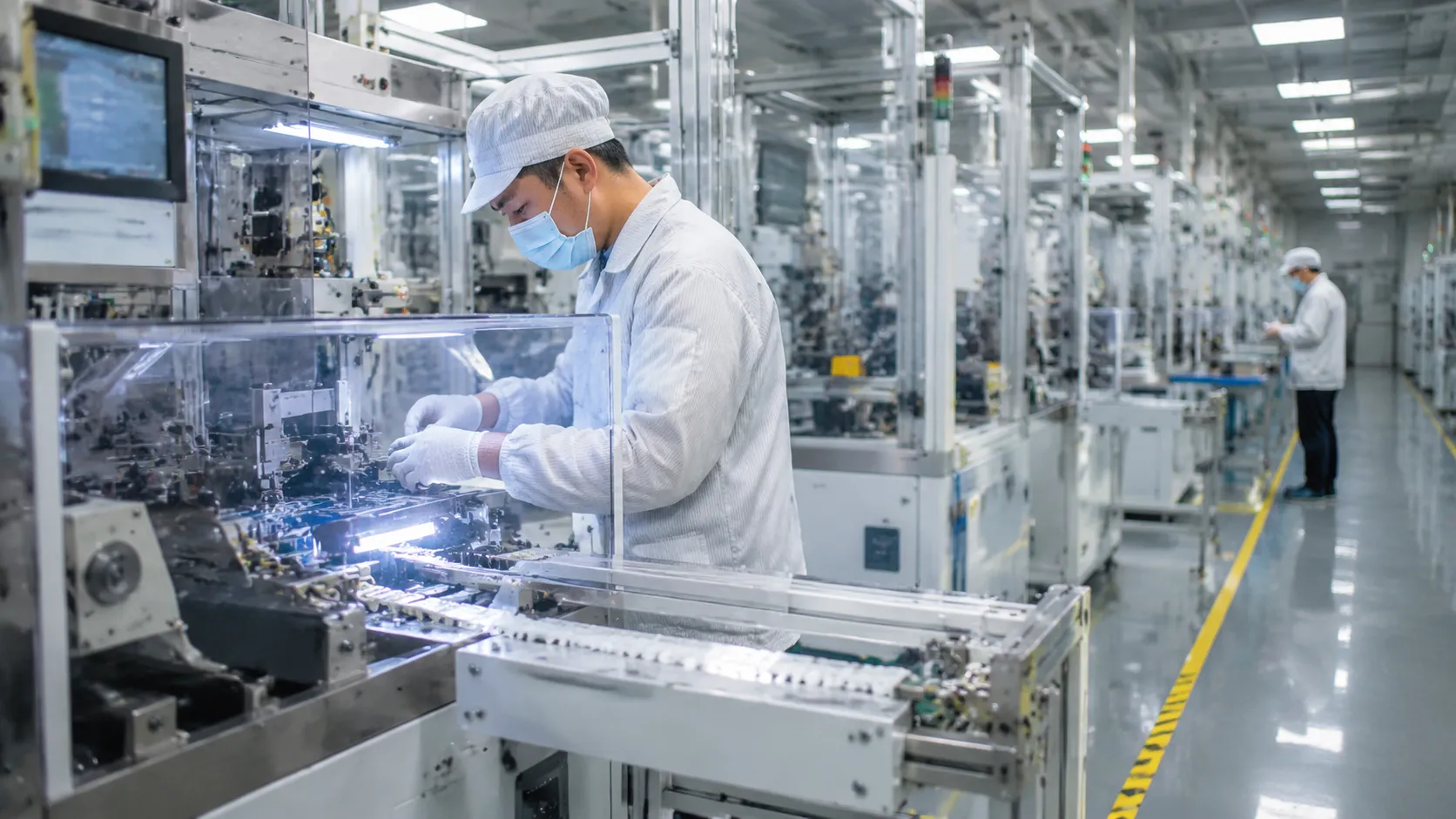
Standard lighting rarely fits the exact needs of large-scale commercial or architectural projects. As a leading led strip factory, we provide comprehensive OEM/ODM LED strip customization to match your exact job specifications. We modify everything from electrical properties to physical form factors, ensuring you get a high-performance product built specifically for your application.
Voltage Configurations
We manufacture boards across all standard and specialized power profiles. While 12V and 24V voltage configurations are standard for short runs, we also engineer 48V constant-current designs for long-distance linear lighting without visible voltage drop.
Color Profile Tuning
Achieving perfect color consistency requires precision engineering. We offer precise luminous efficacy and binning management to guarantee identical color temperatures across every batch. Our production capabilities include:
High CRI 90+ lighting for superior color rendering in retail and hospitality spaces.
Tunable white, RGB, RGBW, and programmable RGB LED strips for dynamic architectural designs.
Single-bin sorting to eliminate shifting between different production runs.
Specification & Packaging Breakdown
| Custom Parameter | Options Available | Common Application |
|---|---|---|
| Structural Parameters | Custom PCB width (5mm to 20mm), copper thickness (2oz to 4oz), and custom length LED strip production. | Narrow aluminum profiles, high-power commercial fixtures, and precise architectural coves. |
| Branding & Packaging | Laser-printed logos on the FPC, custom anti-static bags, bespoke reel labels, and barcodes. | Wholesale distribution, B2B supply contracts, and retail-ready private labeling. |
A Breakdown of Modern Factory Product Lines
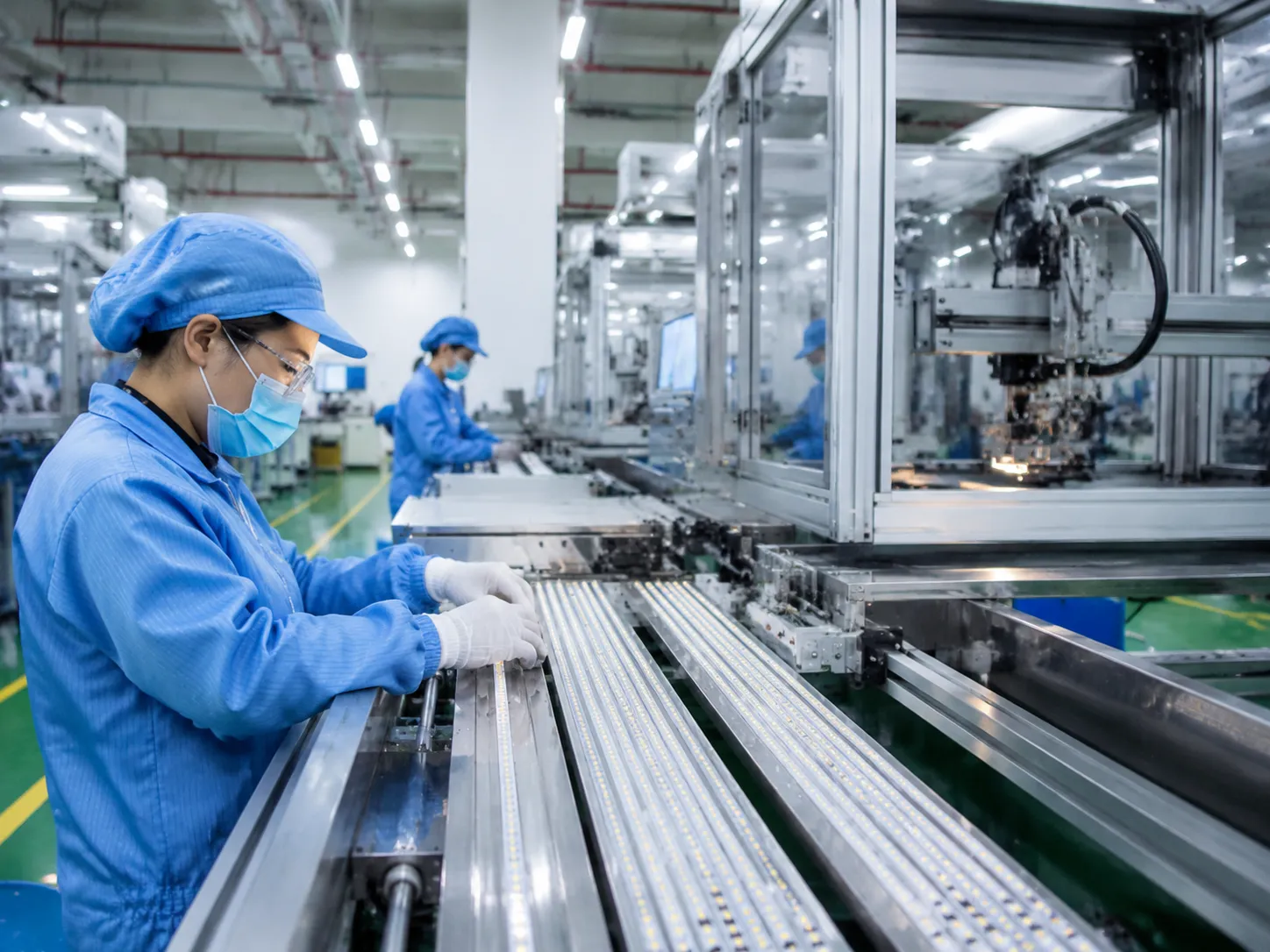
As a leading led strip factory, we continuously evolve our manufacturing capabilities to supply high-performance, commercial-grade solutions. Our state-of-the-art production lines are optimized to manufacture three core product categories designed to meet the rigorous demands of global B2B buyers.
To explore our complete inventory of professional-grade lighting, feel free to browse our comprehensive wholesale LED linear lighting product catalogue.
COB LED Strips
Chip-on-Board (COB) technology represents the modern standard for premium interior linear lighting. By mounting the LED chips directly onto the flexible printed circuit board (FPC), we eliminate the dark spots and visible “dotting” common in older SMD designs.
Seamless Luminescence: Delivers a continuous, dot-free line of light, even in shallow aluminum profiles.
Superior Flexibility: High density of chips allows for tighter bends without damaging the light source.
Optimized Thermal Management: Direct chip-to-board placement ensures highly efficient heat dissipation, extending the lifespan of the fixture.
SOB (Specialized High-Output) LED Strips
When standard lighting isn’t bright enough, our Specialized High-Output (SOB) product lines deliver massive lumen density and intense brightness for demanding architectural applications.
High Luminous Efficacy: Engineered specifically for high-ceiling retail spaces, outdoor facades, and wall-washing applications.
Heavy-Duty Copper FPC: Uses reinforced double-sided PCBs to handle higher currents safely without voltage drops.
High CRI 90+ Lighting: Delivers exceptional color accuracy, making it perfect for high-end hospitality and product displays.
Flexible Neon LED Flex
To replace fragile glass neon, our factory produces highly durable, silicone-extruded flexible neon light strips.
IP67 Waterproof Neon Flex: Perfect for harsh outdoor environments, architectural borders, and wet areas.
Homogeneous Light Output: Specialised diffuse silicone casings completely blend the light, producing a flawless, neon-like glow.
Extreme Durability: Resistant to UV rays, saltwater, high temperatures, and physical impacts, ensuring long-term performance under demanding conditions.
The B2B Buyer’s Checklist: Evaluating a Foreign LED Strip Factory
Finding a reliable offshore partner requires looking past cheap price tags. Over the years running our led strip factory, we have seen exactly what separates seamless partnerships from supply chain nightmares. Use this strict checklist to vet your next B2B LED strip supplier.
Do They Hold Global Certifications?
Never skip compliance. A premium manufacturer must provide verified documentation to clear customs and ensure safety on commercial jobsites.
- Safety Marks: UL listed LED light strips or ETL for North America, CE and RoHS for Europe.
- Quality Management: ISO 9001 certified facilities ensuring a repeatable LED strip quality control process.
What Is Their Sampling Speed?
Time to market is everything. A top-tier factory should dispatch custom engineering samples within 3 to 7 days. If a supplier takes weeks just to modify a basic product configuration, they will likely bottleneck your actual mass production runs.
How Do They Handle Logistics & Export Documentation?
Shipping fragile electronics globally takes deep logistical experience. Reliable manufacturers protect your investment and ensure smooth transit by meeting specific shipping criteria:
| Evaluation Point | Standard Requirement |
|---|---|
| Packaging Protocols | Anti-static shielding bags, moisture absorbents, and reinforced master cartons. |
| Trade Terms | Clear handling of FOB, CIF, or DDP terms based on your risk tolerance. |
| Customs Readiness | Flawless provisioning of Commercial Invoices, Certificates of Origin, and MSDS reports to prevent port delays. |
If you need a manufacturing partner that ticks all these boxes without the hassle, you can contact us directly to review your upcoming project specs.