Are you confused by the technical jargon when shopping for lighting? Choosing between an IP65 vs IP67 vs IP68 LED strip can be the difference between a stunning, long-lasting installation and a costly electrical failure.
I’ve seen countless projects ruined because someone picked the wrong rating for a “damp” location. It’s not just about resisting a few splashes; it’s about understanding the nuances of dust ingress and prolonged submersion.
In this guide, I’m cutting through the marketing fluff to show you exactly how these ratings are tested, how to match the right protection to your specific environment, and the common installation mistakes that void your warranty.
Stop guessing and start protecting your investment. Let’s dive in.
What Is IP Rating & How Is It Tested?
An IP rating, or Ingress Protection rating, is a standardized international classification defined by IEC standard 60529. It acts as a definitive benchmark for the level of protection an LED strip has against the intrusion of solid objects (like dust) and liquids (like water). When evaluating an IP65 vs IP67 vs IP68 LED strip, understanding these two digits is essential for ensuring product longevity in various environments.
Decoding the Digits
The rating consists of the letters “IP” followed by two numbers:
First Digit (0-6): Indicates the level of protection against solid foreign objects. A “6” indicates total protection against dust ingress.
Second Digit (0-8): Indicates the level of protection against moisture and water. Higher numbers represent superior resistance to water penetration.
Rigorous Testing Standards
Manufacturers subject LED strips to controlled laboratory environments to verify these ratings. Testing procedures include:
Dust Chambers: Ensuring no particles can penetrate the housing of the LED strip.
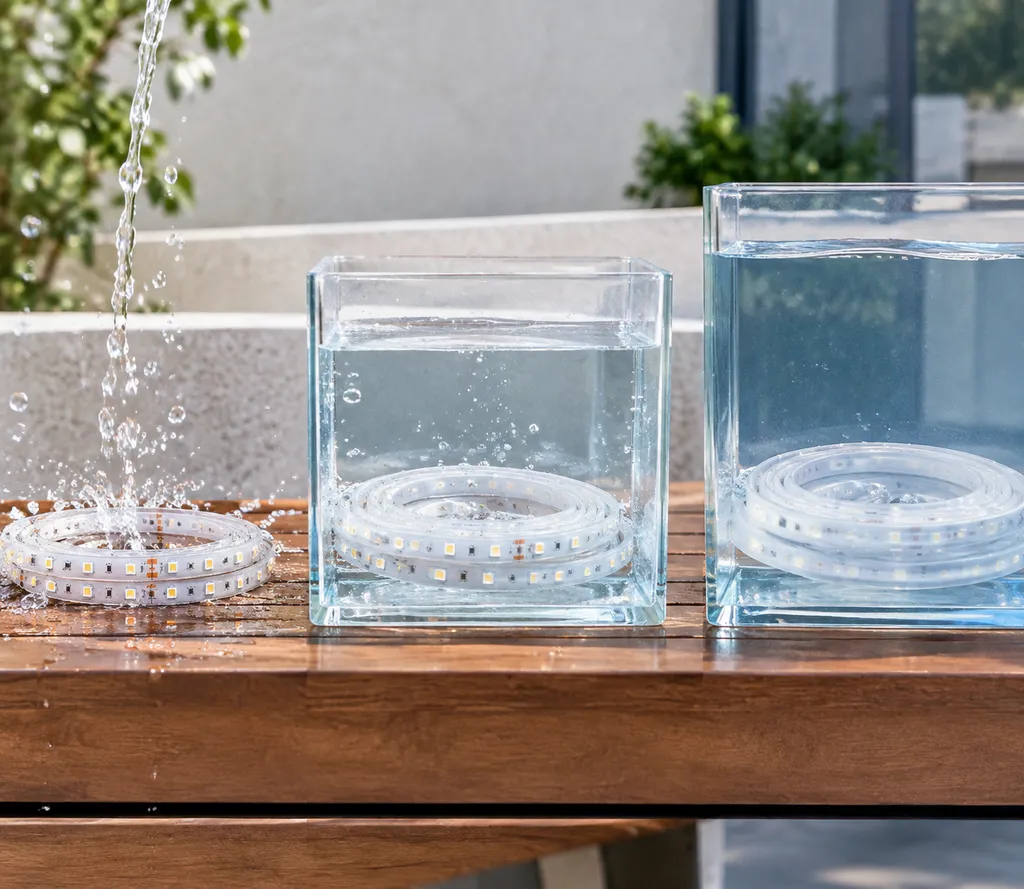
Water Jetting: Using specialized nozzles to spray water from various angles at specific pressures to test IP65/66 ratings.
Immersion Tanks: For IP67 and IP68, strips are submerged in water at precise depths and durations to guarantee that the sealants and enclosures prevent internal damage.
By adhering to these strict testing protocols, LED strips provide the reliability required for challenging lighting applications, ensuring your investment
remains protected against environmental hazards.
IP65, IP67, IP68: Detailed Protection Difference
Understanding the nuances of IP65 vs IP67 vs IP68 LED strip ratings is essential for ensuring your lighting setup withstands its environment. These ratings indicate how well a product resists dust and water ingress, with higher numbers generally signifying superior protection.
Breakdown of Ingress Protection Ratings
- IP65: Rated as “dust-tight” and protected against water jets. This is perfect for indoor areas where moisture might be present, such as kitchens or bathrooms, or for covered outdoor installations.
- IP67: Offers full protection against dust and can withstand temporary immersion in water (up to 1 meter for 30 minutes). This is a reliable choice for outdoor landscaping where occasional heavy rain or pooling may occur.
- IP68: The gold standard for waterproof lighting. These strips are protected against long-term immersion under pressure. They are the only choice if you are looking for high lumen LED strip options for fountains, pools, or marine applications.
Quick Comparison Table
| Feature | IP65 | IP67 | IP68 |
|---|---|---|---|
| Dust Protection | Fully protected | Fully protected | Fully protected |
| Water Contact | Water jets | Temporary immersion | Continuous immersion |
| Common Use | Indoor/Covered Outdoor | Garden/Walkways | Ponds/Pools/Underwater |
Choosing the right level of protection ensures your smart LED strip lights provide consistent performance without the risk of short-circuits caused by environmental exposure. Always match the rating to the specific
exposure level of your project location to avoid over-engineering or premature failure.
Which IP Rating for Which Wet/Outdoor Location?
Selecting the correct protection level is critical when sourcing from a professional LED strip factory to ensure your installation survives the local environment. Choosing the right rating prevents premature failure and costly replacements.
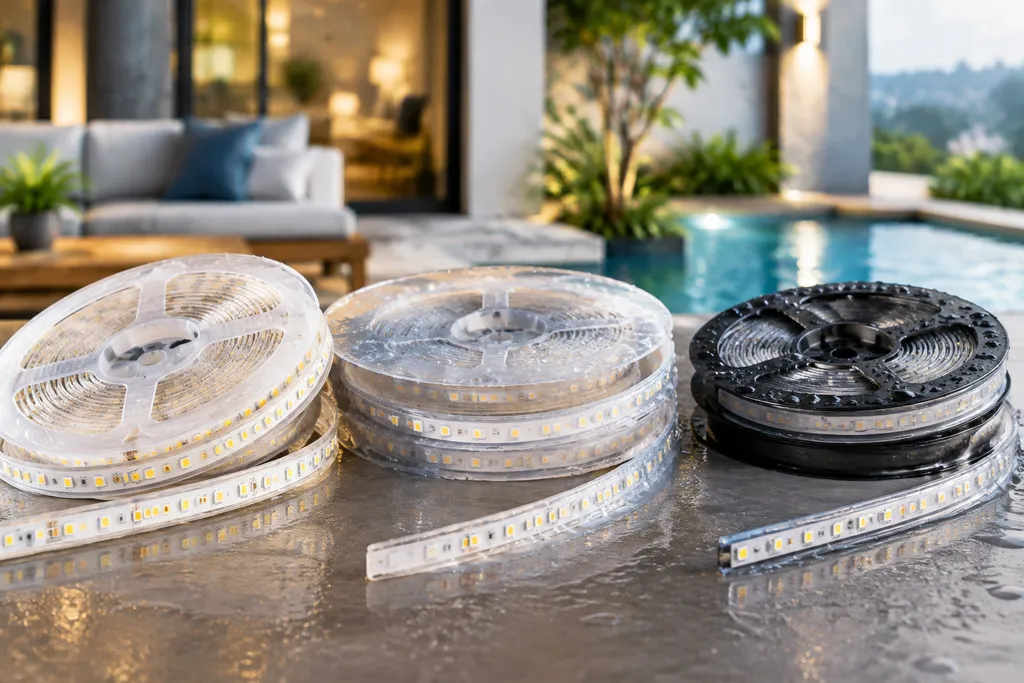
- IP65 (Water Resistant): Ideal for areas where the lights might face occasional splashes or high humidity. Use these for under-cabinet lighting, dry outdoor soffits, or covered patios where the strips are protected from direct rainfall. They are dust-tight but not designed to handle standing water or heavy storms.
- IP67 (Waterproof): These are built for environments where the strips may face brief immersion or heavy, direct exposure to rain. They are the standard choice for garden pathways, pool decks, or outdoor landscape architecture. While they handle wet weather reliably, they should not be installed inside a pool or pond.
- IP68 (Submersible): This is the highest grade, designed for continuous submersion in water. If you are integrating lighting into water features, fountains, or underwater landscape designs, IP68 is the only safe option. These units are encapsulated to prevent any water ingress during long-term underwater use.
Always match your LED lighting choice to the specific contact level expected in your project. For outdoor setups
, ensure your power connections are equally protected, as the strip is only as reliable as its weakest link.
Common Misconceptions About Waterproof LED Strips
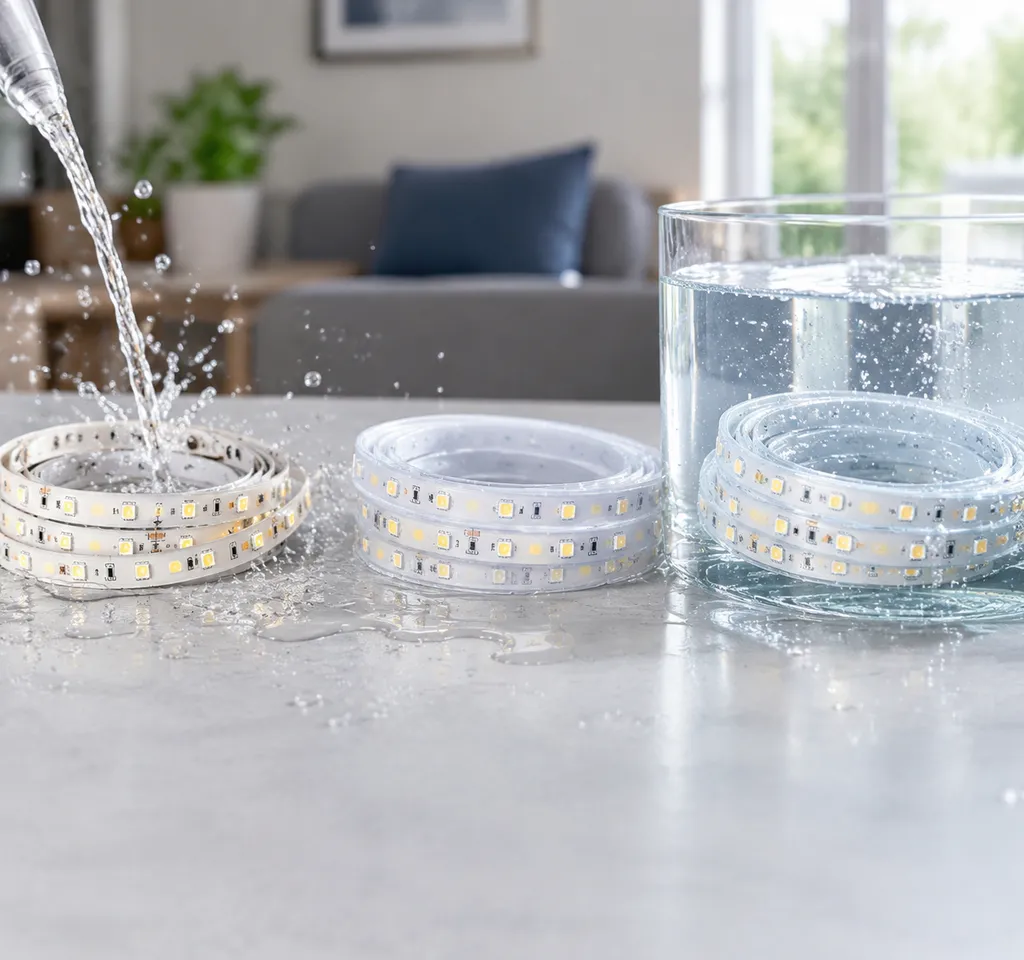
Many people mistakenly assume that the highest IP rating is always the best choice for every project. In reality, choosing an IP68 strip for a dry indoor shelf is unnecessary and can actually make installation more difficult due to the bulkier silicone casing. Selecting the right waterproof LED strip lights should focus on the specific environment rather than just picking the highest number.
Another frequent myth is that “waterproof” means the strip is completely invincible to all elements. Even with high-rated products, the lifespan depends heavily on proper sealing at the end caps and connection points. If these areas are exposed to moisture, internal oxidation will occur regardless of the strip’s rating.
Furthermore, users often confuse “water-resistant” with “chemical-resistant.” Most standard waterproof strips are protected against water ingress but are not designed to withstand exposure to pool chemicals, harsh cleaning agents, or oils. When working with a professional LED strip manufacturer, it is essential to clarify the exact chemical or environmental exposure to ensure the casing material remains intact over time. Always prioritize
the correct ingress protection level for your specific application to avoid performance issues or premature failure.
How to Properly Install & Maintain Waterproof Strips
Installing waterproof LED strips correctly is the most effective way to ensure their longevity. Even with high IP ratings, improper installation can lead to moisture ingress. When setting up your LED strip lighting, ensure the mounting surface is clean, dry, and free of debris. Always avoid excessive bending or twisting of the strips, as this can compromise the silicone or PVC protective casing.
Installation Best Practices
- Avoid Stretching: Never pull or stretch the strips during installation, as this creates micro-fissures in the waterproofing layer.
- Secure Connections: Use IP-rated connectors or heat-shrink tubing at every cut point or junction to maintain a seal.
- Use Mounting Channels: For outdoor or high-traffic areas, mounting the strips in aluminum channels provides extra physical protection against impact and helps with heat dissipation.
- Seal Terminations: If you cut your strips, verify that the end caps are firmly secured with waterproof silicone sealant.
Maintenance and Longevity
Regular maintenance keeps your lighting system in top condition. Periodically inspect the strips for signs of yellowing or cracking in the outer coating, which can occur due to prolonged exposure to harsh UV rays. Gently wipe down the strips with a soft, damp cloth to remove dust or salt buildup. If you notice any moisture inside the casing, power the system down immediately, disconnect the power supply, and reseal the affected area to prevent short circuits. Maintaining a clean environment around your light source is essential for sustained performance
.