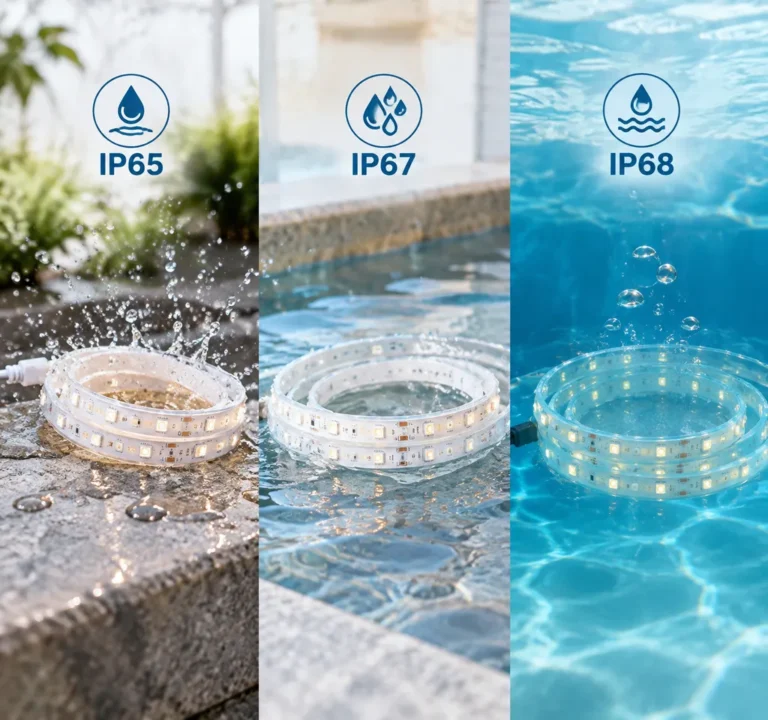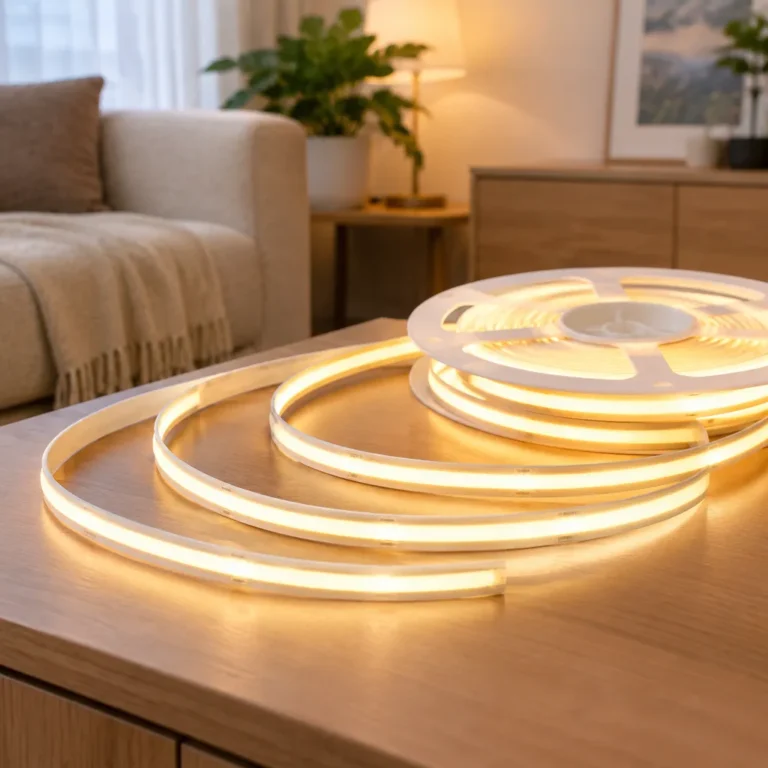
Struggling to choose the right flexible lighting for your next signage project?
The battle between silicone neon vs PVC neon strip usually comes down to two critical factors: long-term durability and your bottom line.
Pick the wrong material, and your signs could yellow, crack, and fail under extreme weather in less than a year. Pick the right one, and you get flawless, dot-free illumination with maximum ROI.
In this guide, you’ll learn the real differences in flexibility, lifespan, and light uniformity—plus a definitive recommendation for channel letter signs based on hands-on industry experience.
Let’s dive right in.
Material & Manufacturing Process Difference
Understanding the fundamental material science and manufacturing engineering behind flexible linear lighting is essential when evaluating silicone neon vs PVC neon strip options for commercial installations. The structural integrity and field reliability of these products stem directly from their base polymers and extrusion methodologies.
Base Polymer Composition
- Silicone Neon: Engineered from high-purity, optical-grade polydimethylsiloxane (silicone polymer). It features an inorganic silicon-oxygen (Si-O) molecular backbone, which provides superior bond energy compared to carbon-based plastics. It contains zero volatile plasticizers.
- PVC Neon: Fabricated from polyvinyl chloride (PVC), a synthetic carbon-chain polymer. To achieve flexibility, manufacturers must compound standard rigid PVC with liquid plasticizers (typically phthalates), which can migrate out of the material over time.
Extrusion and Encapsulation Techniques
The production lines for these two materials require fundamentally distinct machinery and thermal processing:
- Integrated Silicone Co-Extrusion: The LED flexible printed circuit board (FPCB) and optical silicone are merged simultaneously through high-precision tooling via integrated extrusion. Using a two-component platinum curing process, the silicone vulcanizes uniformly, forming a solid, moisture-free encapsulation that completely isolates internal diodes from atmospheric exposure.
- Multi-Stage PVC Extrusion: PVC neon flex is typically produced through traditional hot-melt plastic extrusion. The process involves pulling an LED strip through a pre-extruded or semi-open PVC profile, followed by secondary sealing or gluing. This mechanical assembly approach creates microscopic air cavities and relies on localized bonds that are vulnerable to thermal cycling stress.
Manufacturing & Material Comparison
| Parameter | Silicone Neon Flex | PVC Neon Strip |
|---|---|---|
| Polymer Base | High-grade organosilicon polymer | Polyvinyl chloride with plasticizers |
| Bond Chemistry | Silicon-Oxygen (Si-O) backbone | Carbon-Carbon / Carbon-Chlorine (C-C / C-Cl) |
| Extrusion Method | Integrated continuous co-extrusion | Two-step thermal profile extrusion |
| Curing Mechanism | Platinum-catalyzed thermal vulcanization | Cooling and physical crystallization |
| Plasticizer Content | 0% (Naturally elastomeric) | 20% – 35% (Prone to plasticizer migration) |
| Environmental Impact | Non-toxic, halogen-free, recyclable | Contains halogens, releases toxic chlorine gas under fire |
| Internal Adhesion | Complete molecular bond with FPCB substrate | Mechanical friction fit; risk of internal delamination |
The advanced integrated co-extrusion of silicone guarantees a continuous, uniform protective barrier across every linear foot, eliminating internal voids and establishing an engineered baseline far superior to traditional PVC fabrication methods.
Performance Comparison: Flexibility, Weather Resistance, Lifespan
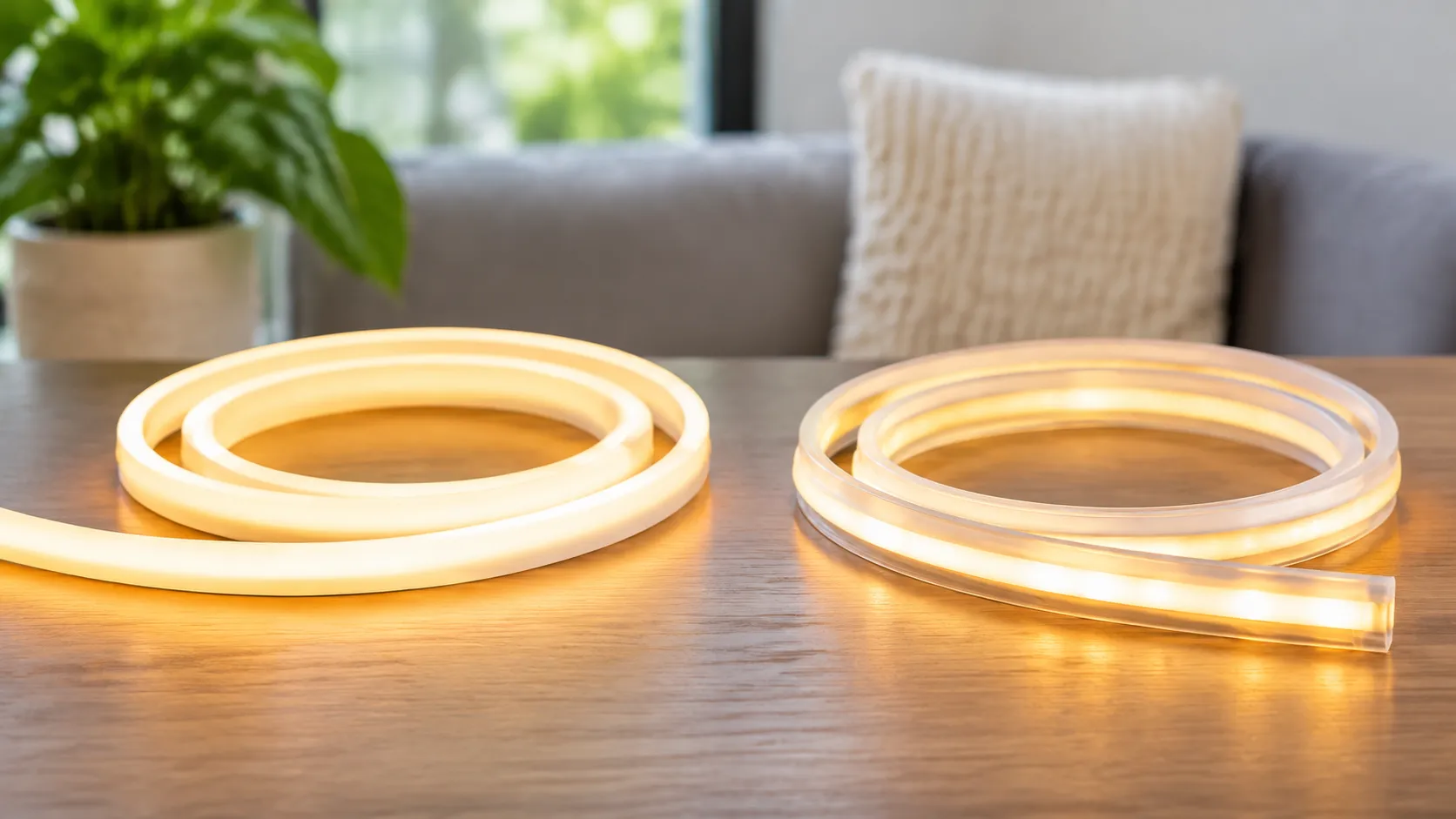
When comparing a silicone neon vs PVC neon strip, physical durability under harsh environmental conditions is where the true divide shows. We put both materials through real-world stress tests to see how they hold up over time.
Quick Spec Comparison
| Performance Factor | Silicone Neon Flex Strip | Traditional PVC Neon Strip |
|---|---|---|
| Bending Radius | Extremely tight; maintains elasticity | Moderate; resists tight angular corners |
| Cold Temperature Flexibility | Remains pliable down to -40°C (-40°F) | Becomes rigid and brittle below 0°C (32°F) |
| UV Resistance | Excellent (zero yellowing over 5+ years) | Fair to poor (yellows and oxidizes outdoors) |
| Thermal Dissipation | High thermal conductivity; cools diodes fast | Low thermal transfer; traps heat internally |
| Chemical Resistance | Resists salt spray, chlorine, acid, and alkali | Degrades with prolonged chemical/salt exposure |
| Rated Lifespan | 50,000+ operational hours | 15,000 to 25,000 operational hours |
Bending Flexibility and Cold-Weather Handling
Silicone features an inherently elastic molecular structure that allows for extreme bends without kinking or pinching the internal circuitry.
- Silicone neon bends effortlessly into intricate shapes, channel letter curves, and tight 90-degree corners. Even in freezing conditions, the jacket remains soft and workable.
- PVC neon strip relies on added chemical plasticizers for flexibility. When ambient temperatures drop, PVC stiffens dramatically. Attempting to bend cold PVC during an outdoor winter installation often leads to surface micro-cracking or snapped solder joints.
UV Protection and Weather Resistance
Outdoor signage faces relentless sun exposure and shifting weather patterns.
- Silicone neon strips use an inorganic polymer backbone that is chemically inert to ultraviolet light. They withstand constant direct sunlight without yellowing, chalking, or hardening. They also pass rigorous salt-spray testing, making them ideal for coastal areas, marine accents, and harsh desert environments.
- PVC neon strips break down under consistent UV radiation. The plasticizers leach out over time, causing the jacket to turn yellow, cloudy, and brittle within 12 to 24 months of outdoor exposure.
Real-World Lifespan and Thermal Stability
A neon flex fixture is only as durable as its thermal management. Silicone possesses superior natural heat conductivity compared to dense plastics. It pulls thermal energy away from the internal diodes—similar to the thermal design needed when running a high-lumen LED strip—preventing premature lumen depreciation.
While PVC jackets trap operating heat and accelerate diode burn-out, silicone encapsulation keeps junction temperatures low, easily sustaining its full brightness and clean look across a 50,000-hour service life.
Light Quality & Uniformity Comparison
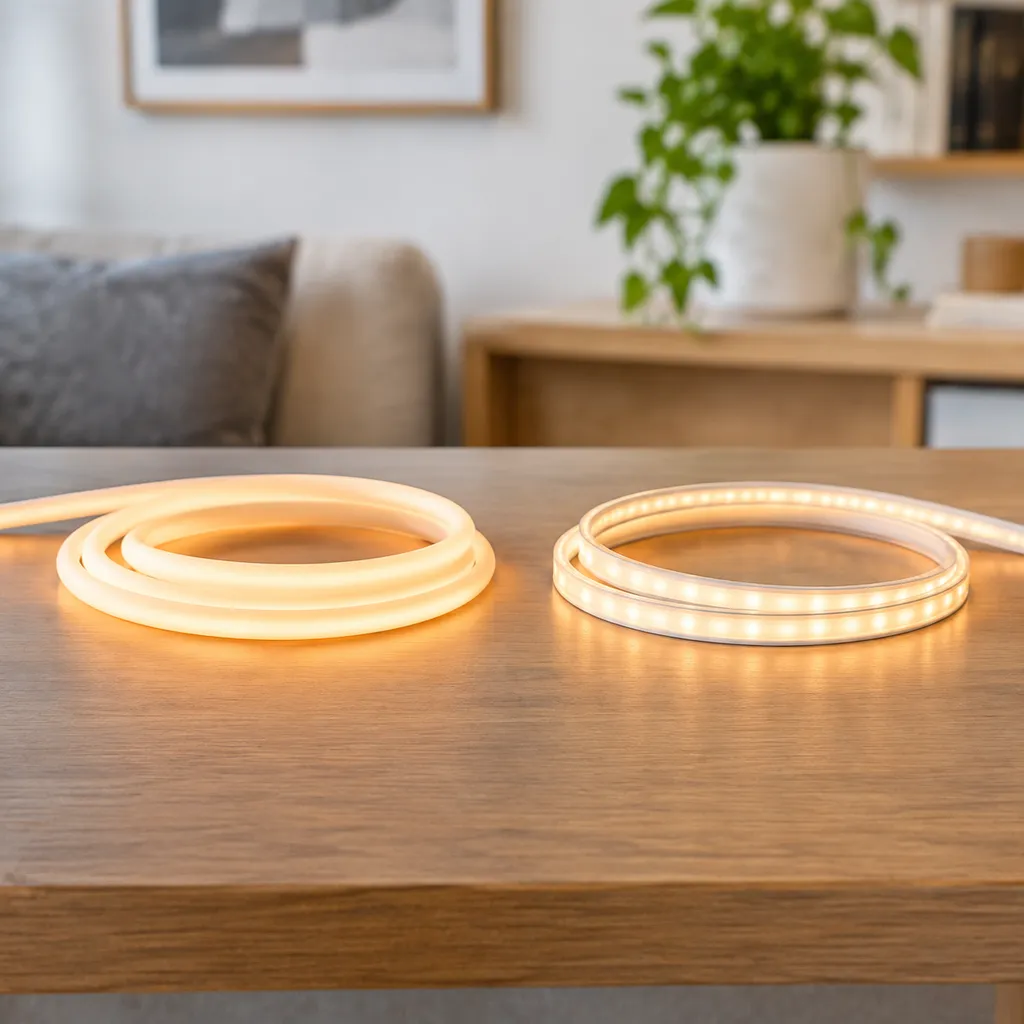
When comparing a silicone neon vs PVC neon strip, optical clarity and light diffusion make an immediate visual difference. I evaluate both materials side by side to ensure every signage project delivers spotless illumination without hot spots.
Diffusion and Spotless Output
Silicone features superior optical properties compared to PVC. Its molecular structure provides natural, uniform light diffusion. This gives you a continuous, dot-free neon glow straight out of the box. PVC, on the other hand, often requires thicker walls or heavy pigments to hide individual LED diode spots. That added density reduces overall light transmission and leaves you with visible dark patches or uneven brightness along the profile.
Color Rendering and Long-Term Stability
Silicone neon strips maintain true color temperature over thousands of operational hours. PVC contains plasticizers that gradually migrate to the surface, causing the jacket to turn yellow and dull the output within months. When we design architectural setups using reliable waterproof LED strip lights, silicone ensures crisp whites and vibrant hues stay consistent over time.
| Optical Parameter | Silicone Neon Strip | PVC Neon Strip |
|---|---|---|
| Light Transmittance | High (up to 90% transmission) | Moderate (roughly 70%–75%) |
| Spotting / Hotspots | Completely dot-free diffusion | Visible LED shadows on tight bends |
| Yellowing Resistance | Excellent (optical grade, no fade) | Poor (prone to UV discoloration) |
| Color Uniformity | Consistent end-to-end Kelvin rating | Shifts over time due to heat degradation |
For applications where clean visual appeal matters, silicone delivers unmatched clarity, smoother illumination curves, and superior lumen maintenance.
Cost & ROI Analysis for Signage Projects
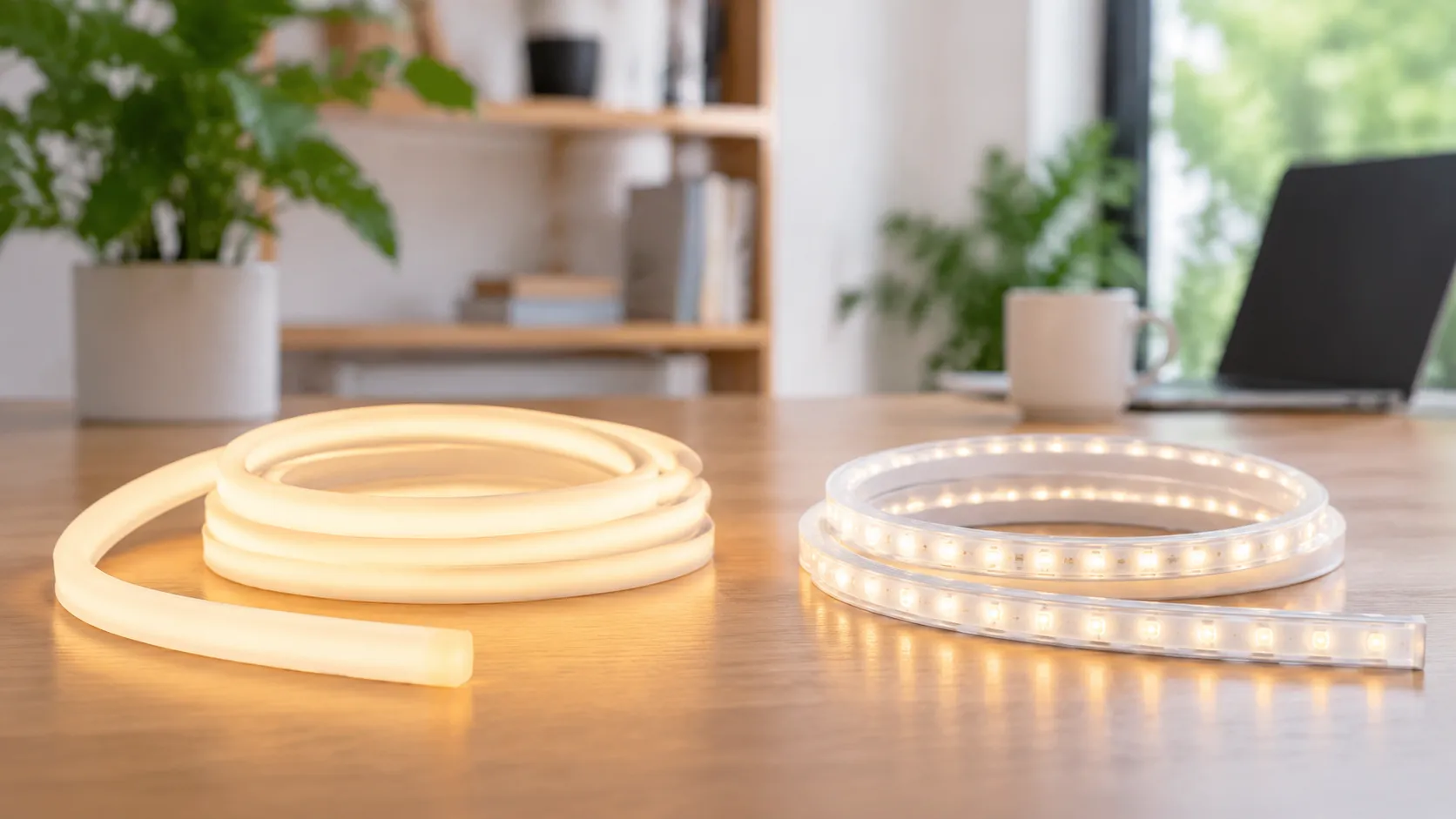
When evaluating silicone neon vs PVC neon strip options for commercial signage, looking strictly at the upfront price tag gives an incomplete picture. As a sign fabricator or business owner, calculating the true return on investment (ROI) requires balancing initial purchase costs against long-term maintenance, warranty claims, and replacement labor.
Upfront Purchase Price vs. Long-Term Value
- PVC Neon Strip (Lower Initial Cost): PVC typically costs 20% to 40% less on the shelf than silicone. For temporary trade show displays, pop-up events, or short-term indoor promotional signs, PVC provides an economical short-run fix.
- Silicone Neon Flex (Higher Upfront, Maximum ROI): While raw material and extrusion processes make silicone more expensive initially, its resistance to yellowing, UV cracking, and extreme weather ensures a significantly longer operational lifespan. Sourcing directly from an established LED strip factory OEM/ODM wholesale manufacturer mitigates upfront procurement costs while securing enterprise-grade consistency.
Total Cost of Ownership Breakdown
| Cost Factor | PVC Neon Strip | Silicone Neon Flex |
|---|---|---|
| Initial Material Cost | Low | Moderate to Premium |
| Installation Difficulty | Stiffer; slower handling in cold weather | Highly flexible; fast routing into sign channels |
| Outdoor Degradation Rate | High (yellows and hardens in 1–2 years) | Extremely Low (maintains clarity and elasticity) |
| Field Replacement Frequency | Frequent for outdoor commercial signs | Rare under standard operating conditions |
| Overall 3–5 Year ROI | Low (offset by high service truck rolls) | High (minimal maintenance overhead) |
Labor and site visits almost always exceed the material cost of the neon strip itself. Replacing a failed outdoor sign letter requires bucket trucks, scaffolding, and technician hours. Opting for silicone eliminates recurring service calls and protects brand reputation. For a deeper technical breakdown of installation and operational variables, review our detailed LED neon flex guide before finalizing your signage budget.
Final Recommendation for Channel Letter Signs
When fabricating channel letter signs, material selection directly affects your installation time, maintenance budget, and brand presentation. Tight curves, sharp angles, and continuous exposure make this application uniquely demanding.
In the battle of silicone neon vs PVC neon strip, silicone is the unequivocal choice for channel letters.
Why Silicone Wins for Lettering
- Tighter Bending Radii: Channel letters feature sharp corners and narrow strokes. Silicone flexes effortlessly without creasing, kinking, or snapping the internal PCB.
- Zero Outdoor Yellowing: PVC breaks down and turns brittle under direct sunlight. Silicone holds its color fidelity and clarity through years of harsh UV exposure.
- Thermal Endurance: Sign enclosures trap heat. Silicone easily withstands internal operating temperatures where PVC softens and warps.
- Seamless Light Dispersion: The optical properties of food-grade silicone produce a clean, hotspot-free face across every letter stroke.
When to Pick PVC vs. Silicone
| Application | Material Choice | Key Reason |
|---|---|---|
| Outdoor Exterior Signs | Silicone Neon | Complete weatherproofing, UV resistance, zero maintenance call-backs. |
| Indoor Acrylic Lettering | Silicone Neon | Easy handling on intricate curves and clean diffusion at close viewing distances. |
| Temporary Event Signage | PVC Neon | Low upfront cost when operational life is under 12 months. |
For long-term reliability and premium aesthetics, I always build with a professional-grade neon LED strip using high-grade silicone extrusion. The minor difference in raw material cost pays for itself by eliminating warranty claims and premature letter burnouts.